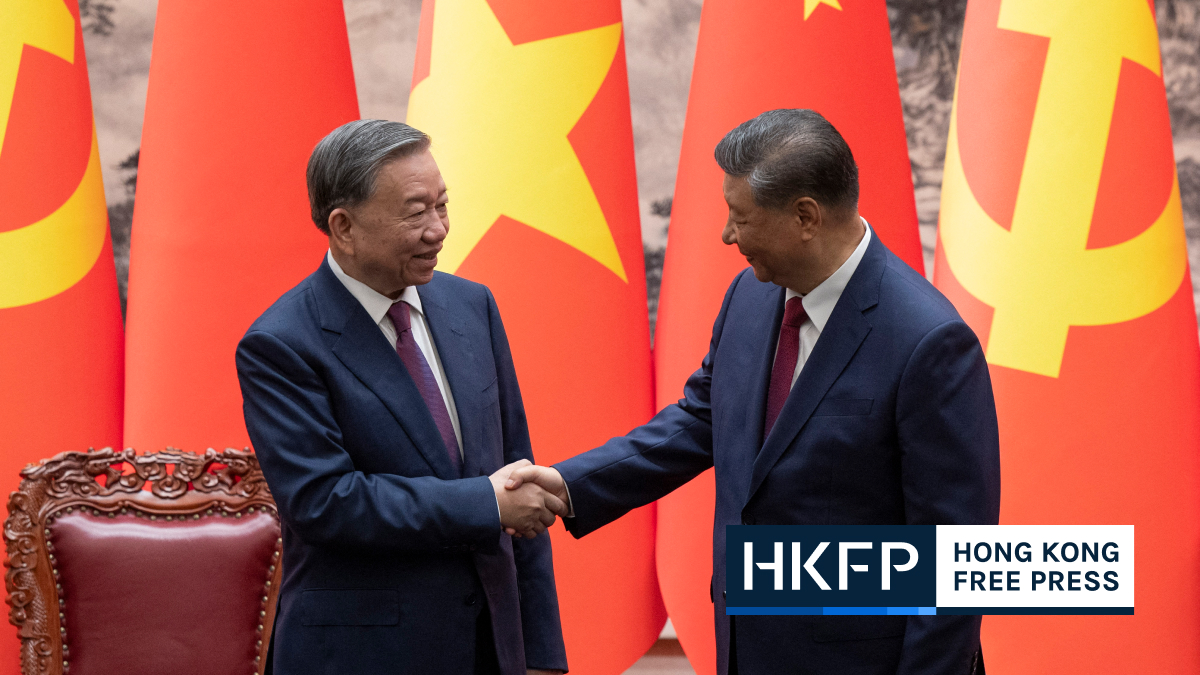
Vietnam’s New President To Lam Prioritizes China in First Overseas Visit, Signaling Deepened Ties
HANOI/BEIJING — Vietnam’s newly appointed President, To Lam, has undertaken his inaugural overseas state visit to Beijing, meeting with Chinese President Xi Jinping. This high-profile trip, coming shortly after To Lam’s ascension, is seen by observers as a clear signal of Hanoi’s commitment to strengthening its “comprehensive strategic cooperative partnership” with Beijing amidst complex regional dynamics. This first foreign engagement sets a significant tone for To Lam’s presidency and Vietnam’s foreign policy trajectory, highlighting the enduring strategic importance of the relationship between the two socialist neighbors. Discussions are expected to span economic collaboration, party-to-party exchanges, and sensitive regional security concerns, including the contentious South China Sea.
Background and Strategic Context
To Lam, formerly Vietnam’s powerful Minister of Public Security, was confirmed as President in May, following a period of political reshuffling within the ruling Communist Party. His swift choice of China for his first international trip is not merely a diplomatic courtesy but a deeply symbolic gesture, reflecting both historical ties and present-day strategic calculations. Vietnam and China, sharing a 1,400-kilometer land border and communist governance, have navigated a relationship characterized by both fraternal camaraderie and profound distrust. This distrust particularly stems from perennial territorial disputes in the South China Sea and a brief but bloody border war in 1979.
Despite these historical tensions and periodic flare-ups, China remains Vietnam’s largest trading partner and a crucial economic engine. Vietnam, on its part, has masterfully employed its unique “bamboo diplomacy” — a strategy of maintaining friendly relations with multiple global powers without aligning exclusively with any single one. This delicate balancing act involves engaging robustly with Western powers like the United States, Japan, and European Union nations, even as it prioritizes its immediate neighbor and ideological comrade, China. The timing of this visit is particularly crucial, occurring at a juncture where global powers are increasingly vying for influence in Southeast Asia, placing Vietnam squarely at the intersection of various geopolitical interests.
Key Discussions: Economy, Party Ties, and Maritime Issues
During the high-level meeting, both leaders are anticipated to reaffirm their commitment to fostering a stable and prosperous relationship. Economic cooperation is undoubtedly high on the agenda. Vietnam’s rapidly growing economy heavily relies on trade and investment with China. Discussions will likely focus on enhancing bilateral trade, which surpassed $230 billion in 2023, streamlining cross-border logistics, and exploring new avenues for investment. This could include infrastructure projects under China’s Belt and Road Initiative, though Hanoi traditionally remains cautious about potential indebtedness and sovereignty concerns associated with such large-scale projects. Energy security, agricultural exports from Vietnam to China, and technological cooperation are also areas ripe for deeper engagement.
Beyond economics, party-to-party exchanges, a hallmark of their shared communist systems, will be emphasized. These ties provide a unique framework for ideological alignment and policy coordination, often conducted away from public scrutiny. On the security front, while public statements will be carefully worded and highly diplomatic, the thorny issue of the South China Sea (known as the East Sea in Vietnam) will undoubtedly feature prominently in private discussions. Both nations claim sovereignty over parts of the resource-rich waterway, leading to intermittent standoffs and heightened tensions. China’s increasingly assertive presence and extensive maritime claims have been a consistent source of concern for Vietnam and other regional claimant states. The visit, therefore, offers a critical opportunity for direct communication aimed at managing differences and preventing any escalation.
Diplomatic Signals and Expert Insights
Ahead of the meeting, Chinese state media highlighted President Xi Jinping’s previous remarks on China and Vietnam being “comrades and brothers sharing a common destiny.” Sources close to the discussions suggested President Xi would likely emphasize the importance of deepening comprehensive strategic cooperation, safeguarding regional peace and stability, and working towards a “community with a shared future for mankind.” For his part, President To Lam is expected to articulate Vietnam’s consistent foreign policy of independence, self-reliance, peace, friendship, cooperation, and development, while underscoring the “traditional friendship” and “mutual respect” that underpin bilateral ties.
Analysts view To Lam’s choice of Beijing as his first destination as a pragmatic foreign policy move. Dr. Le Hong Hiep, a senior fellow at ISEAS-Yusof Ishak Institute, noted, “It sends a clear message that despite Vietnam’s deepening ties with Western powers, especially the US, Hanoi continues to value its relationship with China as a top priority.” This strategic sequencing allows Vietnam to manage expectations from various international partners while solidifying its immediate neighborhood. It also reflects a desire to avoid being drawn into the intensifying geopolitical rivalry between the United States and China, aiming instead to extract benefits from both sides. The visit serves to reassure Beijing of Vietnam’s commitment to stable relations, which is crucial for its sustained economic growth and broader geopolitical stability.
Challenges and the Path Forward
Despite the outward displays of solidarity and cooperation, the relationship between Vietnam and China harbors significant underlying challenges. The South China Sea dispute remains an ever-present fault line, frequently threatening to disrupt bilateral relations. While both nations have established mechanisms for maritime dialogue, tangible progress on a binding Code of Conduct in the South China Sea has been painstakingly slow. Vietnam continues to modernize its military and expand its partnerships with countries like the U.S. and India, partly as a strategic hedge against potential Chinese assertiveness in the region.
Furthermore, while economic ties are robust and indispensable, Vietnam is keenly aware of the need to diversify its supply chains and reduce over-reliance on any single partner, including China—a lesson learned partly during the disruptions of the COVID-19 pandemic. Domestically, Vietnamese public opinion often carries strong anti-China sentiments, a historical legacy that the leadership must delicately balance with its pragmatic foreign policy objectives. To Lam’s tenure will be tested in navigating these intricate internal and external pressures, ensuring Vietnam’s sovereignty and national interests are protected while fostering essential economic and political cooperation.
Conclusion
President To Lam’s maiden overseas trip to China, culminating in a meeting with President Xi Jinping, marks a pivotal moment for both nations. It reinforces the deep, multifaceted ties between two of Asia’s most significant communist states, characterized by a complex interplay of ideological affinity, profound economic interdependence, and underlying geopolitical rivalry. While the visit is poised to strengthen cooperation in numerous sectors and underscore a commitment to regional stability, it also subtly highlights the delicate balancing act Vietnam continues to perform on the global stage.
As To Lam begins his tenure, his initial diplomatic foray signals a clear intent to prioritize relations with China, acknowledging its immense influence as a neighbor and major power. Simultaneously, it reaffirms Vietnam’s commitment to maintaining its strategic autonomy and unique “bamboo diplomacy” posture in an increasingly multipolar world. The outcomes and diplomatic ripple effects of this significant visit will undoubtedly reverberate not only in Hanoi and Beijing but across the broader Indo-Pacific region.