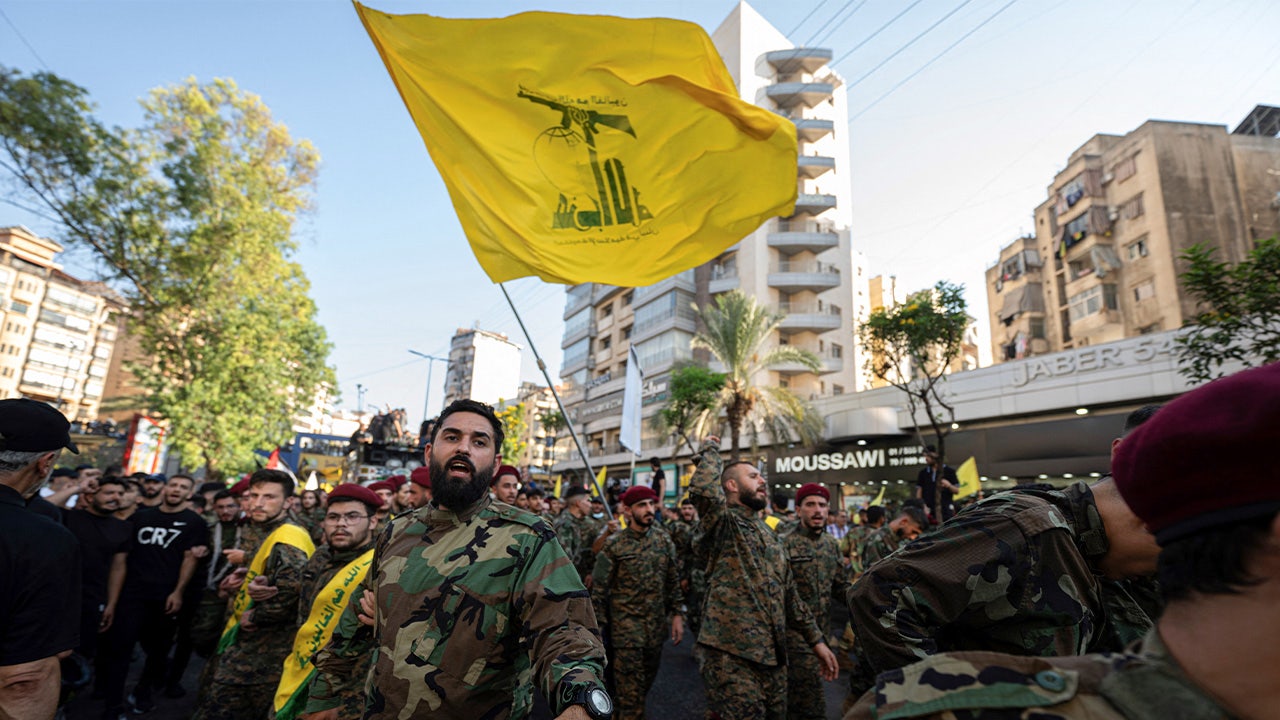
Lebanese Premier Affirms Nation’s Stance: No War Sought with Hezbollah, No Intimidation Endured
BEIRUT, LEBANON – [Current Date] – In a stark declaration aimed at both domestic and international audiences, Lebanese Prime Minister Najib Mikati has asserted that Lebanon, despite the escalating regional tensions, neither seeks war with Hezbollah nor will it succumb to intimidation. The statement, widely reported and scrutinized, underscores Beirut’s precarious position as it navigates a volatile geopolitical landscape marked by ongoing hostilities on its southern border.
Mikati’s remarks come at a critical juncture, with the Middle East gripped by the conflict between Israel and Hamas in Gaza, and the subsequent surge in cross-border clashes between Israel and the Iran-backed Hezbollah movement in southern Lebanon. These daily exchanges of fire have stoked fears of a wider regional conflagration, a scenario Lebanon, already reeling from a protracted economic crisis and political paralysis, desperately seeks to avoid.
A Delicate Balancing Act Amidst Regional Turmoil
The Prime Minister’s message is a carefully calibrated tightrope walk. On one hand, it signals a desire for de-escalation and peace, implicitly acknowledging the catastrophic potential of a full-blown war. On the other, the assertion of not being intimidated reflects a determination to uphold Lebanese sovereignty and resist external pressures, whether from belligerent neighbours or powerful internal actors. “Lebanon does not seek war, but it will not be intimidated,” Mikati reportedly stated, capturing the essence of the nation’s complex foreign policy challenge.
The sentiment highlights the unique political reality of Lebanon, where Hezbollah, a heavily armed political party designated as a terrorist organization by several Western nations, wields significant influence and maintains a military wing arguably more potent than the national army. The Lebanese government, while officially sovereign, operates under the shadow of Hezbollah’s parallel military infrastructure, especially in the country’s south.
Hezbollah’s Role and the Specter of Escalation
Since the onset of the Israel-Hamas conflict on October 7, Hezbollah has engaged in a calculated series of attacks against Israeli targets along the border, framing its actions as a show of solidarity with Palestinians and a deterrent against Israeli aggression. These actions, ranging from missile launches to drone attacks, have consistently drawn retaliatory strikes from Israel, targeting Hezbollah positions and infrastructure within Lebanon. The intensity of these exchanges varies daily, but the underlying tension remains palpable.
For many observers, Hezbollah’s actions are a carefully managed balancing act designed to pressure Israel without triggering an all-out war – a conflict that would inevitably devastate Lebanon. However, the risk of miscalculation is ever-present. Israeli officials have repeatedly warned that they are prepared to use full force if Hezbollah does not cease its provocations, with some advocating for a pre-emptive strike to push the group away from the border.
Internal Fragility and International Concerns
Lebanon’s domestic situation further complicates its ability to withstand external pressures. The country has been mired in an unprecedented economic crisis since 2019, leading to widespread poverty, rampant inflation, crumbling public services, and a mass exodus of its skilled workforce. A persistent political vacuum, marked by the inability to elect a new president and the functioning of a caretaker government, further hobbles the state’s capacity to govern effectively or respond robustly to external threats. This profound internal fragility makes the prospect of a new, wider conflict particularly daunting, threatening to unravel the very fabric of the state and exacerbate an already dire humanitarian situation.
The international community, acutely aware of Lebanon’s vulnerabilities, has repeatedly urged all parties to exercise restraint and de-escalate tensions. High-level diplomatic efforts, primarily led by the United States and France, are reportedly underway to find a lasting mechanism to stabilize the border, potentially involving an enhanced mandate for the UN peacekeeping forces (UNIFIL) or the implementation of proposals aimed at creating a demilitarized zone. However, the efficacy of such efforts hinges critically on the willingness of both Israel and Hezbollah to compromise, a willingness that appears scarce amidst the current climate of escalating rhetoric and military exchanges. The fundamental challenge lies in reconciling Lebanon’s official governmental stance with the independent military decisions made by Hezbollah, a duality that international mediators constantly grapple with.
Echoes of the Past: Lessons from 2006
The current situation draws chilling parallels to the 2006 Israel-Hezbollah War, a devastating 34-day conflict that resulted in significant casualties on both sides, widespread destruction in Lebanon, and a profound humanitarian crisis. The memory of that war serves as a potent reminder of the potential consequences should the current skirmishes spiral out of control. Lebanon’s infrastructure, its economy, and its social cohesion are even more vulnerable today than they were nearly two decades ago.
Prime Minister Mikati’s insistence that Lebanon “will not be intimidated” can also be interpreted as a message directed at internal forces and external powers that might seek to exploit Lebanon’s vulnerability. It signals a resolve to maintain a semblance of national agency, even as the country faces existential threats from multiple directions.
Looking Ahead: A Nation on the Brink
As the conflict in Gaza continues to rage, casting a long and ominous shadow over the entire region, Lebanon finds itself precariously caught between powerful geopolitical currents. Prime Minister Mikati’s statement encapsulates the nation’s desperate plea for peace and stability, while simultaneously affirming its resolve to maintain its sovereignty and dignity. The delicate balance he attempts to strike – avoiding war while refusing to be bullied – reflects the profound challenges facing a state with limited control over a formidable non-state actor operating within its borders. The path ahead remains fraught with peril, with the balance between restraint and uncontrolled escalation hanging by a thread. The coming weeks and months will be crucial in determining whether Lebanon can avert another catastrophic war, or if it will be tragically drawn further into the vortex of regional conflict, with potentially devastating consequences for its people and future.