Global Military Expenditure Hits Historic $2.44 Trillion Amid Rising Geopolitical Volatility
In a stark reflection of a deteriorating global security environment, total global military expenditure reached an all-time high of $2.44 trillion in the past year. This represents a 6.8 percent increase in real terms from the previous year, the steepest year-on-year rise since 2009. According to the latest data released by the Stockholm International Peace Research Institute (SIPRI), for the first time since 2009, military spending increased in all five geographical regions: Africa, the Americas, Asia and Oceania, Europe, and the Middle East.
Defense analysts suggest that the unprecedented surge is a direct consequence of the breakdown in international peace and security. From the protracted conflict in Ukraine to the escalating tensions in the Middle East and the growing competition in the Indo-Pacific, nations are pivoting away from the “peace dividend” of the post-Cold War era toward a footing of long-term deterrence and active combat readiness.
The Dominance of the Superpowers: US and China
The United States remains the world’s undisputed leader in military spending. In the last fiscal year, U.S. defense outlays reached $916 billion, accounting for roughly 37 percent of total global military expenditure. This figure is nearly three times larger than that of the second-largest spender, China. The U.S. increase has been driven largely by investments in research, development, and testing, as the Pentagon seeks to maintain its technological edge over near-peer competitors in areas such as hypersonic missiles, artificial intelligence, and space-based defense systems.
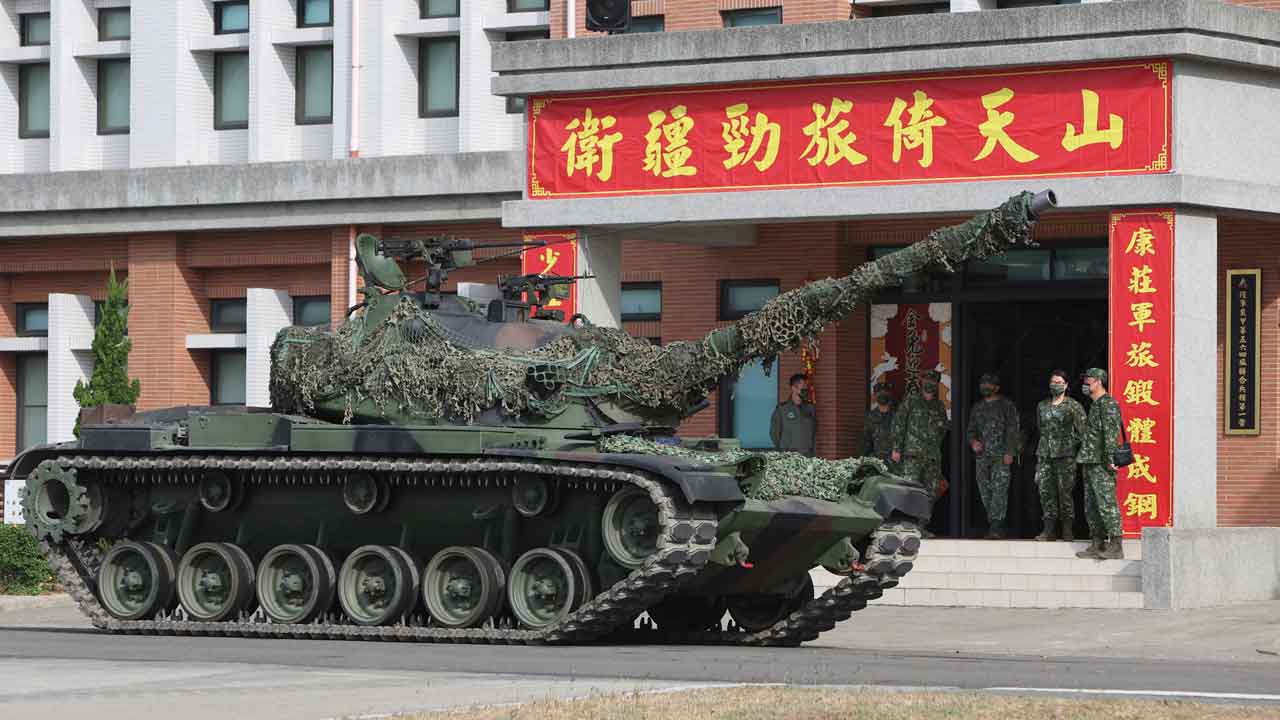
China, the world’s second-largest spender, allocated an estimated $296 billion to its military, a 6 percent increase over the previous year. This marks the 29th consecutive year of growth in China’s military spending. Beijing’s steady buildup is focused on modernizing the People’s Liberation Army (PLA), with a particular emphasis on its naval and missile capabilities. This trend has prompted a regional arms race, as neighboring countries like Japan and Taiwan significantly bolster their own defense budgets in response to China’s maritime assertiveness.
Europe: A Continent Rearming
Perhaps the most dramatic shift in the global landscape has occurred in Europe. The ongoing invasion of Ukraine by Russia has fundamentally altered the continent’s security architecture. Total military spending in Europe rose by 16 percent, with Eastern European nations leading the charge. Russia’s military spending grew by 24 percent to an estimated $109 billion, representing 5.9 percent of its GDP—the highest level since the dissolution of the Soviet Union.
On the opposite side of the front lines, Ukraine’s military spending rose to $64.8 billion. While this is less than Russia’s total, it accounts for a staggering 37 percent of the nation’s GDP. Furthermore, when including the tens of billions in military aid provided by Western allies, Ukraine’s total defense resources nearly match those of Russia. This massive influx of capital has transformed the region into a high-intensity industrial warfare zone, the likes of which have not been seen in Europe for eight decades.
Within NATO, there is a renewed urgency to meet the target of spending 2 percent of GDP on defense. Poland, for instance, has embarked on one of the most ambitious rearmament programs in modern history, with its spending jumping by 75 percent in a single year to reach $31.6 billion. The “Zeitenwende” or “turning point” in German defense policy has also begun to materialize, with Berlin moving to modernize its long-neglected Bundeswehr.
Middle East and the Indo-Pacific Tensions
The Middle East saw a 9 percent increase in military spending, reaching an estimated $200 billion. This rise was driven largely by Saudi Arabia—the fifth largest spender globally—and Israel. Israel’s military spending grew by 24 percent, largely due to the large-scale military operations in Gaza following the October 7 attacks. The regional volatility has prompted other Gulf states to also increase their procurement of advanced missile defense systems and fighter jets, fearing a wider regional escalation involving Iran.
In Asia, the narrative is dominated by the strategic competition between the U.S. and China. Japan allocated $50.2 billion to its military, part of a multi-year plan to double its defense spending by 2027. Tokyo is shifting away from its strictly self-defense posture toward possessing “counterstrike” capabilities, citing the “unprecedented challenge” posed by China and the nuclear threat from North Korea.
Economic Implications and the Defense Industrial Base
The surge in spending has placed immense pressure on the global defense industrial base. After decades of consolidation and “just-in-time” production models, defense contractors in the West are struggling to meet the skyrocketing demand for ammunition, artillery shells, and advanced weaponry. Companies like Lockheed Martin, Rheinmetall, and BAE Systems have reported record order backlogs, but supply chain bottlenecks and a shortage of skilled labor remain significant hurdles.
Furthermore, the diversion of public funds toward defense is sparking intense political debates in many democracies. As governments grapple with high inflation and post-pandemic debt, the choice between “guns and butter” is becoming increasingly acute. Critics argue that the massive investment in weaponry comes at the expense of climate change mitigation, healthcare, and infrastructure. However, proponents argue that without national security, all other social and economic goals are inherently vulnerable.
A New Era of Global Insecurity
The record-breaking figures for 2023 suggest that the world is entering a period of prolonged instability. The shift in military spending is not merely a temporary spike but appears to be a structural change in how nations view their survival. The proliferation of advanced technology, combined with the erosion of arms control treaties, has created a more complex and dangerous geopolitical environment.
As the SIPRI report highlights, the unprecedented increase in military spending is a symptom of a world in which the rule of law is increasingly replaced by the rule of force. With no immediate end in sight to the conflicts in Europe and the Middle East, and with tensions simmering in the South China Sea, the upward trajectory of global defense budgets is expected to continue well into the next decade. The global community now faces the daunting challenge of managing this rearmament to prevent a major systemic collapse or a third world war.