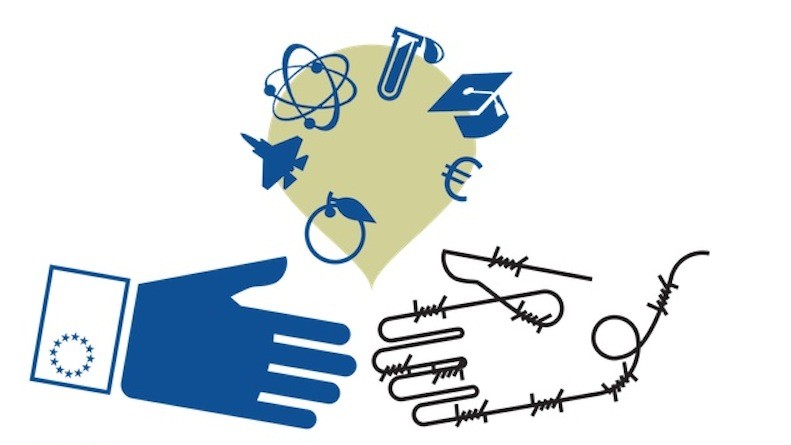
Germany and Italy Stand Firm: EU Bid to Suspend Israel Association Deal Rejected Amid Gaza Crisis
BRUSSELS/BERLIN/ROME – [Date] – A significant rift has emerged within the European Union, as Germany and Italy have firmly rejected a concerted push by several EU allies, including Spain, Ireland, and Belgium, to suspend the EU-Israel Association Agreement. This internal division underscores the deepening disagreements among member states regarding the bloc’s stance on Israel’s ongoing military campaign in Gaza and the escalating humanitarian crisis.
The call to suspend the agreement, which governs extensive trade, scientific, and cultural cooperation between the EU and Israel, stems from growing concerns over human rights and alleged violations of international law in Gaza. Proponents of the suspension argue that Israel has breached Article 2 of the agreement, which stipulates that relations ‘shall be based on respect for human rights and democratic principles.’ They believe that strong action, such as suspending the pact, is necessary to pressure Israel to cease its military operations and address the catastrophic humanitarian situation in the Palestinian enclave.
However, Berlin and Rome have taken a staunchly opposing stance, emphasizing the critical importance of maintaining diplomatic channels and dialogue with Israel, rather than resorting to isolationist measures. Germany, deeply rooted in its historical responsibility towards Israel’s security, has consistently advocated for a nuanced approach. German officials, while expressing concern over civilian casualties and the humanitarian plight in Gaza, have reiterated Israel’s right to self-defense following the brutal October 7 attacks by Hamas. They argue that suspending the agreement would not only be counterproductive to de-escalation efforts but could also destabilize an already volatile region and hinder future peace prospects.
A high-ranking German diplomat, speaking anonymously to reporters, stated, “Germany’s commitment to Israel’s security is non-negotiable. While we are gravely concerned by the suffering in Gaza, we believe that dialogue and engagement are the only viable paths forward. Punitive measures, such as suspending foundational agreements, risk shutting down communication entirely and making it harder to influence events on the ground or secure humanitarian access.” This sentiment reflects Germany’s long-standing ‘Staatsräson’ (reason of state) regarding Israel’s right to exist and defend itself, a principle that continues to shape its foreign policy.
Italy, under the leadership of Prime Minister Giorgia Meloni, has echoed Germany’s position. Rome has maintained a pragmatic foreign policy that prioritizes stability and diplomatic engagement across the Mediterranean and Middle East. Italian officials have underscored the importance of distinguishing between condemning specific actions and severing an entire framework of cooperation. They argue that the EU-Israel Association Agreement serves as a vital conduit for discussing sensitive issues, including human rights and the need for a two-state solution, and that dismantling it would remove a crucial lever of influence. “Italy believes in the power of diplomacy and continuous engagement,” an Italian foreign ministry spokesperson affirmed. “Cutting ties would not facilitate peace; it would complicate it, diminishing our ability to advocate for a resolution to the conflict and provide aid to those in need.”
The EU-Israel Association Agreement, signed in 1995 and effective since 2000, forms the bedrock of political and economic relations between the bloc and Israel. It facilitates preferential trade tariffs, cooperation in various sectors from agriculture to research and development, and regular political dialogue. Suspending this agreement would have significant economic repercussions for both sides, but its symbolic weight in the realm of international diplomacy would be even greater, signaling a profound deterioration in relations.
The internal EU debate highlights the profound geopolitical challenges facing the continent. Spain, Ireland, and Belgium, along with several other nations, have voiced increasing frustration with Israel’s military conduct, particularly following repeated calls from the International Court of Justice (ICJ) and the United Nations for greater protection of civilians and unhindered humanitarian aid. Their push for suspension is seen as an attempt to exert concrete pressure where diplomatic condemnations have seemingly failed to alter Israel’s strategy.
This rejection by two of the EU’s largest economies and most influential members indicates that the bloc is unlikely to adopt a unified, punitive stance against Israel concerning the Gaza conflict in the immediate future. Instead, the EU’s policy is expected to remain a complex mosaic of differing national approaches, ranging from strong condemnation of Israel’s actions by some member states to steadfast support for its security by others, while collectively advocating for humanitarian aid and a long-term peace solution.
The decision by Germany and Italy to hold the line underscores a fundamental divergence in how EU members perceive the most effective way to address international conflicts and uphold human rights, particularly when balancing these concerns against strategic alliances and regional stability. As the Gaza crisis continues, this internal European struggle over policy towards Israel is set to remain a defining feature of the bloc’s foreign relations.