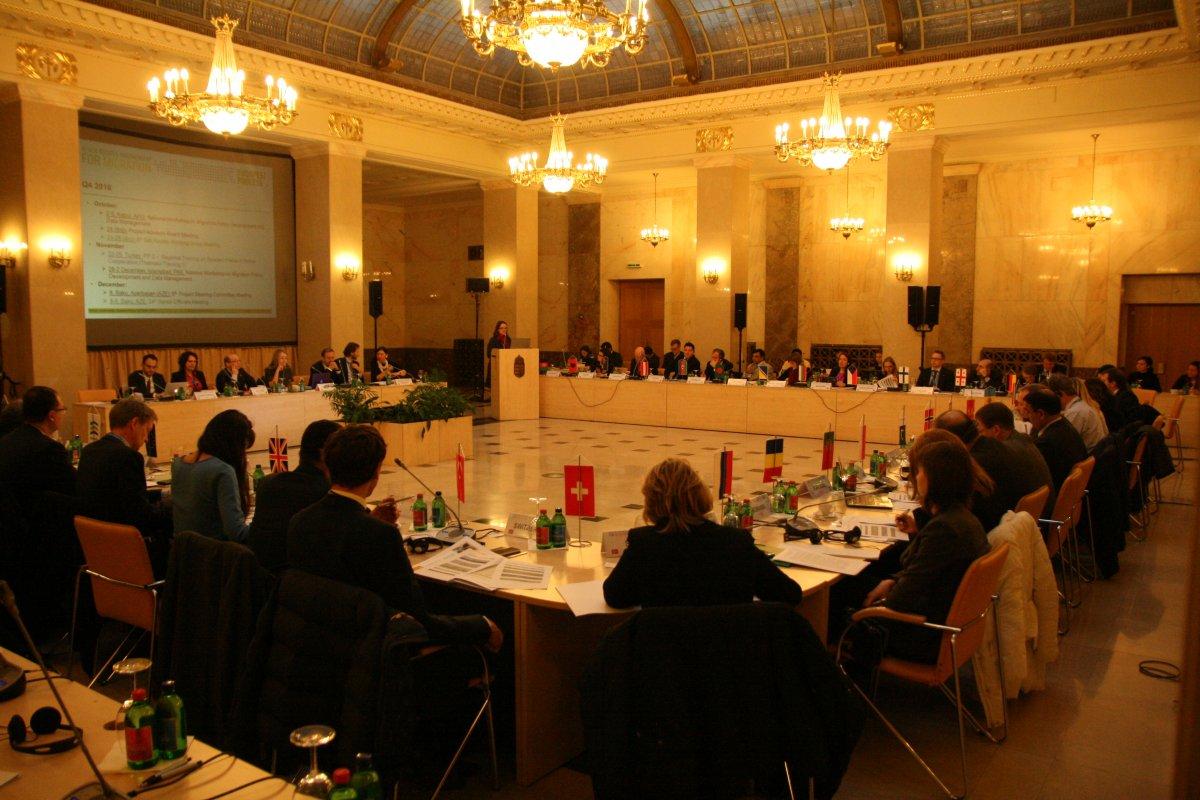
EU Officials in Budapest for Pivotal Talks on Unlocking Hungary’s Frozen Billions
BUDAPEST, Hungary – A high-level delegation of European Union officials has arrived in Budapest this week for critical discussions aimed at resolving the long-standing deadlock over billions of euros in frozen EU funds, held back due to persistent rule of law concerns under Prime Minister Viktor Orbán’s government. This visit marks a crucial juncture in the contentious relationship between Brussels and Budapest, as Hungary desperately seeks to access the substantial financial aid crucial for its economic development and post-pandemic recovery.
The funds, totaling approximately 22 billion euros in cohesion funds and a significant portion of the country’s post-pandemic recovery and resilience facility, have been withheld by the European Commission for several years. The EU’s primary contention revolves around Hungary’s perceived democratic backsliding, including issues related to judicial independence, anti-corruption measures, academic freedom, and LGBTQ+ rights. Brussels maintains that these funds can only be released once Hungary demonstrates tangible and irreversible reforms addressing these fundamental European values.
The Core of the Dispute: Rule of Law and Democracy
At the heart of the dispute is the EU’s conditionality mechanism, a tool designed to protect the bloc’s budget by linking the disbursement of funds to respect for the rule of law. The European Commission has repeatedly cited concerns over what it perceives as a systemic erosion of democratic institutions in Hungary. Critics point to the centralization of power, the weakening of checks and balances, and a perceived lack of transparency in public procurement as key areas of concern. For the EU, releasing these funds without concrete reforms would undermine the credibility of its commitment to uphold democratic principles across its member states.
Prime Minister Orbán, a vocal critic of what he often labels as Brussels’ federalist ambitions, has consistently argued that the withholding of funds is politically motivated. His government contends that Hungary has made significant strides in addressing the Commission’s demands, particularly in areas like judicial reform. Budapest has introduced legislative changes aimed at bolstering judicial independence, enhancing anti-corruption frameworks, and strengthening public procurement oversight, all in an effort to satisfy Brussels’ benchmarks.
Hungary’s Efforts and Economic Stakes
The Hungarian government has been actively engaged in a delicate diplomatic dance, seeking to balance its sovereign policy decisions with the imperative of securing much-needed EU financial support. The frozen funds represent a substantial portion of Hungary’s planned investments in infrastructure, environmental projects, and social programs. The lack of access to these funds has put a noticeable strain on the national budget and slowed down critical development projects, particularly in a period of economic uncertainty exacerbated by high inflation and the energy crisis.
Recent reforms enacted by the Hungarian parliament include measures to limit political interference in the judiciary, strengthen the powers of the National Judicial Council, and improve the effectiveness of anti-corruption bodies. These steps are viewed by Budapest as significant concessions, demonstrating a genuine commitment to addressing EU concerns. However, the European Commission, supported by various European Parliament resolutions and human rights organizations, insists on evaluating not just the letter of the law but also its practical implementation and long-term impact on the rule of law landscape.
EU’s Stance and Potential Pathways Forward
The EU delegation’s visit involves detailed technical discussions with Hungarian ministries and institutions to assess the adequacy and effectiveness of the reforms. Officials will scrutinize the practical application of new laws and assess whether the changes are robust enough to guarantee the independence of institutions and the fair management of EU funds. While there is a strong desire within the EU to resolve this issue and avoid further alienation of a member state, the Commission remains steadfast in its position that rule of law principles are non-negotiable.
A potential breakthrough could see a phased release of funds, with initial tranches becoming available upon verified compliance with specific conditions, followed by further disbursements contingent on sustained progress. This approach would allow the EU to maintain leverage while offering Hungary a tangible incentive for continued reforms. However, analysts warn that any compromise must not be perceived as a capitulation to a member state that has consistently challenged EU norms, lest it set a dangerous precedent for others.
The Broader Implications for Europe
The outcome of these talks in Budapest carries significant implications not only for Hungary but for the entire European Union. It will serve as a crucial test of the EU’s ability to enforce its foundational values and protect its financial interests against internal challenges. A successful resolution, where funds are released following genuine and lasting reforms, could reinforce the effectiveness of the conditionality mechanism. Conversely, a weak settlement could embolden other member states to disregard EU rule of law principles without fear of significant financial repercussions.
As the discussions unfold behind closed doors, the eyes of both Brussels and Budapest remain fixed on the negotiating table. The path to unlocking Hungary’s billions is complex, fraught with political sensitivity, and deeply intertwined with the fundamental question of the EU’s identity and its commitment to a Union founded on common values. The coming weeks will reveal whether a pragmatic solution can be forged that satisfies both Hungary’s economic needs and the EU’s unwavering demand for adherence to the rule of law.