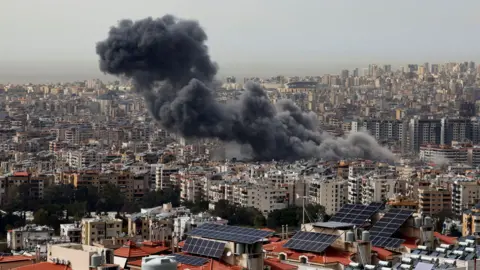
Echoes of Despair: Israeli Strikes Level Entire Villages in Southern Lebanon, Leaving ‘Everything Gone’
BEIRUT, LEBANON – DATE (e.g., June 18, 2024) – A harrowing humanitarian crisis is unfolding in southern Lebanon as relentless Israeli bombardments have reportedly obliterated entire villages, reducing homes, infrastructure, and livelihoods to dust. The scale of destruction, described by residents and aid workers as unprecedented, has left thousands displaced and fearing for a future where ‘everything is gone’, echoing a dire assessment initially brought to light by reports from The Guardian.
For months, the border region between Lebanon and Israel has been a flashpoint, escalating in parallel with the conflict in Gaza. What began as targeted exchanges has morphed into a systematic campaign that, according to local authorities and international observers, appears to be erasing communities from the map. Villages like Aita al-Shaab, Maroun al-Ras, and Dhayra, once vibrant agricultural hubs, now stand as ghost towns, scarred landscapes of rubble and desolation.
“We fled with nothing but the clothes on our backs,” recounted Fatima Hassan, a 62-year-old grandmother from Aita al-Shaab, now sheltering in a school in Tyre. “Our house, our olive groves, the village mosque – all gone. My family has lived there for generations. There is nothing left to return to. My heart aches; it’s like our history has been wiped away.” Her voice trembled, reflecting the trauma shared by tens of thousands who have been forced to abandon their homes.
Satellite imagery analysed by various human rights organisations supports these testimonies, revealing widespread destruction disproportionate to reported military targets. Entire residential areas, health clinics, schools, and essential infrastructure, including water and electricity networks, have been systematically levelled. The deliberate nature of some strikes has raised serious questions about adherence to international humanitarian law, particularly principles of distinction and proportionality.
“The damage is not collateral; it’s comprehensive,” stated Dr. Lena Khalil, a field coordinator for a local NGO attempting to provide aid to the displaced. “We’re seeing deliberate targeting of civilian infrastructure. The goal seems to be to render these areas uninhabitable, to create a buffer zone through destruction and displacement. This isn’t just about military objectives; it’s about altering the demographic and geographic reality of the border.”
Lebanese government officials have vehemently condemned the Israeli actions, calling for urgent international intervention to halt what they describe as ‘ethnic cleansing’ and ‘war crimes’. caretaker Prime Minister Najib Mikati’s office released a statement highlighting the “unbearable suffering” of the Lebanese people and the “catastrophic environmental and social consequences” of the ongoing bombardment.
Israel maintains that its operations in southern Lebanon are defensive, aimed at preventing attacks by Hezbollah and securing its northern border. Israeli Defence Forces (IDF) spokespersons have stated that they only target Hezbollah military infrastructure and operatives, accusing the militant group of embedding itself within civilian areas. However, the extent of the destruction observed on the ground contradicts claims of precision targeting and minimal civilian impact.
The humanitarian situation is deteriorating rapidly. Over 90,000 people have been internally displaced from southern Lebanon, struggling with inadequate shelter, limited access to food, water, and medical care. The fear of returning to a war-torn landscape, riddled with unexploded ordnance and devoid of any basic services, looms large over their uncertain futures. Many have lost their livelihoods, primarily agriculture, which formed the backbone of the region’s economy.
International aid organisations are struggling to access the hardest-hit areas due to ongoing hostilities and security concerns. The lack of safe corridors and the continuous threat of aerial bombardment make any assessment or delivery of vital assistance extremely perilous. Appeals for increased funding and humanitarian access have largely gone unanswered amidst the global focus on the Gaza Strip.
Human rights groups, including Amnesty International and Human Rights Watch, have called for independent investigations into alleged war crimes, urging the international community to hold perpetrators accountable. They emphasize that widespread or systematic destruction of civilian objects without military necessity constitutes a grave breach of the Geneva Conventions and Rome Statute.
As the international community grapples with the wider regional implications, the plight of southern Lebanon’s erased villages remains a stark reminder of the devastating human cost of conflict. For families like Fatima Hassan’s, the concept of ‘home’ has ceased to exist, replaced by a landscape of rubble and the haunting echo of ‘everything is gone’, leaving behind only despair and a profound sense of loss for generations to come.
The imperative now is not just to provide aid, but to ensure accountability and to secure a lasting peace that allows these displaced communities to rebuild their lives, homes, and history from the ashes.