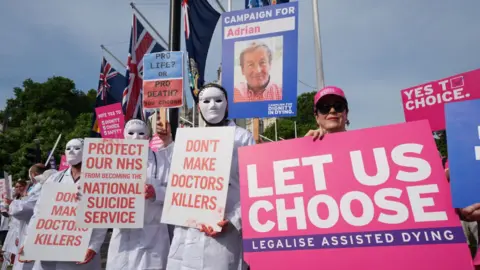
Unelected Peers Spark Uproar as Assisted Dying Bill Stalls in UK Parliament
London, UK – In a move that has reignited fierce debate over democratic legitimacy and end-of-life care, a small contingent of unelected members of the United Kingdom’s House of Lords recently played a pivotal role in effectively blocking an Assisted Dying Bill. The intervention by just seven peers, whose positions are not subject to public vote, has drawn sharp criticism from campaigners and highlighted the enduring power of Britain’s upper chamber in shaping legislation on one of society’s most sensitive issues. This significant setback for proponents of assisted dying comes amidst growing public support for greater autonomy in end-of-life decisions, setting the stage for continued legislative battles and calls for parliamentary reform.
The Legislative Labyrinth and the Lords’ Intervention
A Bill on Life and Death
The Assisted Dying Bill, a Private Member’s Bill introduced in the House of Lords, sought to legalise assisted dying for terminally ill, mentally competent adults in England and Wales. Under the proposed legislation, strict safeguards would have been in place, including multiple medical assessments, judicial oversight, and a clear prognosis of six months or less to live. Proponents argue that such a law offers compassion and dignity to those facing unbearable suffering, allowing them a choice in their final moments. Similar legislative attempts have been made repeatedly over the past two decades, consistently facing strong opposition but also garnering increasing public and cross-party support.
The Seven and Their Influence
While the overall debate in the House of Lords saw many powerful speeches both for and against the bill, the collective action of a minority of peers proved decisive. These seven unelected Lords, predominantly driven by deeply held religious convictions or profound ethical concerns regarding the sanctity of life and the protection of vulnerable individuals, wielded significant procedural influence. Their arguments often centered on the ‘slippery slope’ concern – that legalising assisted dying for the terminally ill could eventually lead to broader application – and the potential for pressure on elderly or disabled individuals to choose to end their lives. Despite not being elected, their contributions and parliamentary tactics were instrumental in stalling the bill’s progress, preventing it from moving to the next crucial stages of legislative scrutiny.
Democratic Scrutiny vs. Expertise
The blocking of the bill by unelected members has intensified the long-standing debate about the role and composition of the House of Lords. Supporters of the current system often argue that the Lords, free from electoral pressures, can provide valuable legislative scrutiny, drawing on a wealth of expertise from various fields. They contend that peers can act as a check on the executive and ensure laws are well-considered. However, critics vehemently argue that allowing unelected individuals to block or significantly impede legislation that has considerable public backing undermines democratic principles, particularly on issues of profound societal impact like assisted dying. The incident highlights the inherent tension between an unelected chamber’s revising function and the will of the elected House of Commons, or indeed, public opinion.
The Broader Debate: Ethical Minefield and Public Opinion
A Nation Divided
The debate around assisted dying is one of the most ethically complex and emotionally charged issues facing modern societies. In the UK, public opinion polls have consistently shown significant, though not universal, support for legalising some form of assisted dying under strict conditions. However, opposition remains fervent, particularly from religious groups, disability rights organisations who fear potential discrimination, and medical professionals concerned about the sanctity of life and the primary role of palliative care. The fundamental conflict lies between individual autonomy and the collective societal value placed on protecting life and preventing harm, especially to the vulnerable.
International Precedents
The UK is not alone in grappling with this dilemma. Several countries and jurisdictions worldwide have already legalised some form of assisted dying or euthanasia, offering a spectrum of models and safeguards. Nations such as Canada, Belgium, the Netherlands, Luxembourg, New Zealand, and several states in Australia and the United States have implemented laws that permit assisted dying under stringent conditions, typically involving terminal illness, unbearable suffering, and robust mental capacity assessments. These international examples often serve as both inspiration and cautionary tales in the ongoing UK debate, providing evidence of how such laws can operate, or the challenges they can present.
Context and Background: The House of Lords – A Peculiar Institution
History and Composition
The House of Lords is the second chamber of the UK Parliament, tracing its origins back to medieval councils. Historically comprised of hereditary peers, its composition underwent significant reform in 1999, removing most hereditary peers and replacing them predominantly with ‘life peers’ – individuals appointed for their lifetime by the monarch on the advice of the Prime Minister, often for their contributions to public life, politics, or specific professions. It also includes 26 Church of England bishops. This unique composition aims to bring a diverse range of expertise and experience to legislative scrutiny, theoretically independent of electoral cycles.
Powers and Limitations
While often described as a revising chamber, the House of Lords holds considerable, albeit constrained, powers. It can scrutinise, amend, and delay legislation proposed by the House of Commons. However, under the Parliament Acts of 1911 and 1949, it cannot permanently block most government bills that have passed the Commons, merely delay them for a limited period. For Private Member’s Bills, such as the Assisted Dying Bill, the Lords retain greater power to block or effectively ‘talk out’ a bill, making their intervention more potent. This legislative ‘veto’ in certain circumstances fuels the arguments for reform.
The Unelected Question
The unelected nature of the House of Lords has been a persistent point of contention throughout modern British political history. While some defend its role as a safeguard against hasty legislation and a source of independent expertise, critics argue that it represents a democratic deficit in a modern parliamentary system. Numerous attempts at comprehensive reform, including proposals for an entirely or partially elected second chamber, have faltered due to a lack of consensus, leaving the Lords’ unique and often controversial role largely intact, as evidenced by its recent intervention on assisted dying.
What Lies Ahead?
Stalled, Not Ended
The recent setback for the Assisted Dying Bill in the House of Lords does not signal the end of the campaign. Proponents are resolute, viewing this as a temporary delay rather than a definitive defeat. The issue is deeply embedded in public consciousness and legislative agendas, and it is highly probable that future bills, potentially in either the Lords or the Commons, will be introduced. The moral and ethical arguments for and against assisted dying will continue to be debated vigorously in public forums, media, and medical communities.
Calls for Reform and Reconsideration
This episode is also likely to intensify calls for further reform of the House of Lords itself. The spectacle of unelected peers effectively thwarting legislation on such a sensitive and widely discussed issue provides fresh ammunition for those advocating for a more democratically accountable second chamber. As the UK grapples with evolving societal values and the complexities of end-of-life care, the interplay between public will, parliamentary procedure, and the influence of unelected bodies will undoubtedly remain a central feature of its political landscape. For the families and individuals who advocate for assisted dying, the wait for legislative change continues, punctuated by both hope and renewed frustration.