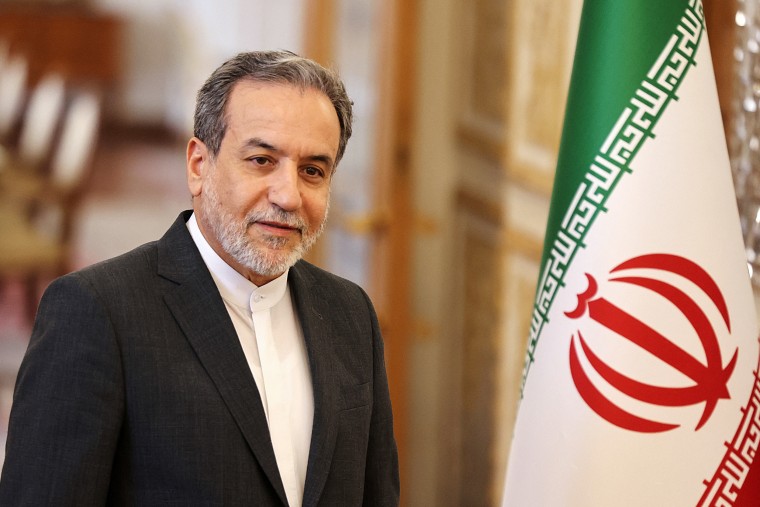
Strategic Pivot: Iranian Foreign Minister Meets Putin in Moscow Amid Stalled Nuclear Talks with Washington
In a high-stakes diplomatic maneuver that underscores the shifting geopolitical landscape of Eurasia and the Middle East, Iranian Foreign Minister Hossein Amir-Abdollahian met with Russian President Vladimir Putin in Moscow this week. The meeting, characterized by officials from both sides as a “significant step toward strategic partnership,” comes at a critical juncture: negotiations to revive the 2015 Joint Comprehensive Plan of Action (JCPOA) between Tehran and world powers have effectively stalled, leaving the Biden administration in a diplomatic limbo.
As the curtains of the Kremlin opened for the Iranian delegation, the message sent to Washington was clear. Iran, frustrated by what it perceives as American intransigence and the slow pace of sanctions relief, is increasingly looking toward the East to secure its economic and security future. For President Putin, the meeting offered a timely opportunity to demonstrate that despite Western efforts to isolate Russia following the invasion of Ukraine, Moscow remains a central pillar of a burgeoning alternative global order.
The Moscow Meeting: A Message to the West
The discussions in Moscow reportedly spanned several hours, covering a wide array of topics from bilateral trade and energy cooperation to the ongoing regional security challenges in Syria and the Caucasus. However, the shadow of the nuclear deal loomed large over the proceedings. According to sources familiar with the meeting, the Iranian Foreign Minister provided Putin with an update on the latest communication—or lack thereof—with the European Union mediators and the U.S. State Department.
“Our policy of ‘Looking to the East’ is not a temporary tactic but a strategic choice,” Amir-Abdollahian stated during a joint press conference following the closed-door sessions. He emphasized that while Iran remains open to a functional return to the JCPOA, it will not wait indefinitely for the United States to make the “necessary political decisions” to lift sanctions. Putin, in turn, reaffirmed Russia’s support for Tehran’s position, criticizing the “unilateral and illegal” sanctions imposed by the West on both nations.
JCPOA Stagnation and the Shift Eastward
For months, the Vienna-based talks to restore the 2015 nuclear agreement have been on life support. The primary sticking points remain the U.S. refusal to provide long-term guarantees that a future administration will not once again withdraw from the deal, as Donald Trump did in 2018, and the designation of the Islamic Revolutionary Guard Corps (IRGC) as a foreign terrorist organization. As these issues remain unresolved, Iran has steadily increased its uranium enrichment levels, pushing its breakout time to a window that Western intelligence agencies describe as dangerously short.
The stalemate has forced Tehran to accelerate its integration into the Shanghai Cooperation Organization (SCO) and the BRICS+ framework. By aligning more closely with Russia, Iran seeks to create a sanctions-proof economic corridor. This includes the development of the International North-South Transport Corridor (INSTC), a 7,200-kilometer multi-mode network of ship, rail, and road routes for moving freight between India, Iran, Azerbaijan, Russia, Central Asia, and Europe.
Military Cooperation and the Ukraine Conflict
The meeting also touched upon a subject of intense scrutiny in Washington: the growing military cooperation between Tehran and Moscow. U.S. officials have repeatedly sounded the alarm over Iran’s supply of unmanned aerial vehicles (UAVs) to the Russian military for use in the conflict in Ukraine. While both Tehran and Moscow have officially downplayed the extent of this military trade, the tactical synergy between the two nations has reached unprecedented levels.
Analysts suggest that in exchange for drone technology and potential ballistic missile support, Iran is seeking advanced Russian military hardware, including the Su-35 fighter jets and the S-400 missile defense systems. Such an exchange would significantly alter the balance of power in the Persian Gulf, a prospect that has already put regional rivals and the United States on high alert.
U.S. Response and Regional Implications
The State Department’s response to the Moscow meeting was one of cautioned concern. A spokesperson noted that “Iran’s deepening alliance with a country that is violating the sovereignty of its neighbor is a sign of its increasing isolation from the international community.” However, the reality on the ground suggests otherwise. Rather than isolation, Iran is finding common cause with a nuclear-armed superpower that shares its disdain for the Western-led financial and political order.
The meeting also reverberated across the capitals of the Middle East. Israel, which has maintained a delicate balancing act with Russia due to the latter’s presence in Syria, views the deepening Russia-Iran ties with extreme trepidation. Prime Minister Benjamin Netanyahu has long argued that only a “credible military threat” can stop Iran’s nuclear ambitions, but a Russian defensive umbrella over Iran could make any such military action far more complicated and risky.
Conclusion: A New Era of Defiance
As the Iranian delegation departs Moscow, the diplomatic ball is once again in Washington’s court. However, the options available to the Biden administration are narrowing. The strategy of “maximum pressure” through sanctions has failed to bring Tehran back to the table on U.S. terms, and the alternative—a military escalation—remains a deeply unpopular and dangerous path.
The Amir-Abdollahian-Putin summit signals that the era of Western-centric diplomacy in the Middle East is facing its most significant challenge yet. By solidifying a Moscow-Tehran axis, both nations are signaling that they are prepared to endure Western economic pressure by building a parallel system of trade and security. For the Iranian people, the success of this pivot remains to be seen as the domestic economy continues to suffer, but for the leadership in Tehran, the path to the Kremlin has become the primary lifeline in an increasingly polarized world.