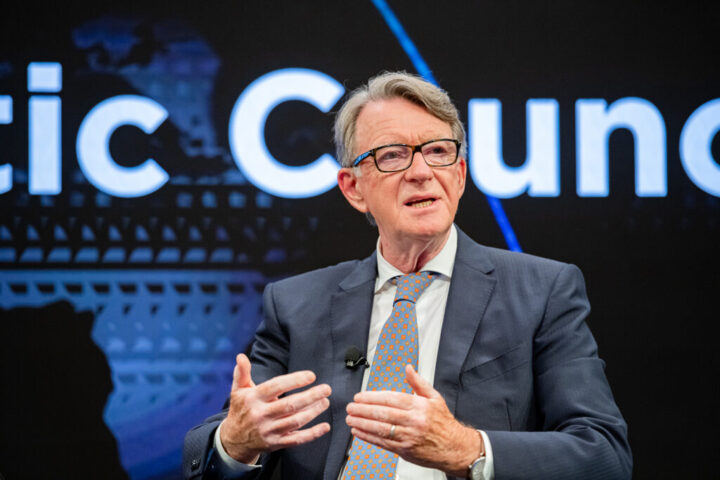
Mandelson’s U.S. Ambassadorship Plagued by Revelation of Failed Security Vetting, Per New York Times
WASHINGTON D.C. – The appointment of Peter Mandelson, a towering figure in British politics often dubbed the ‘Prince of Darkness,’ as Britain’s Ambassador to the United States has been cast under a significant shadow by a startling report from The New York Times. The influential newspaper revealed that Mandelson assumed the high-stakes diplomatic post despite allegedly failing a crucial security vetting process, raising profound questions about the integrity of high-level government appointments and the delicate balance of international trust.
The revelation, attributed to unnamed sources familiar with the matter, posits a situation rarely seen at such senior levels of diplomatic service. An ambassadorial role, particularly to a nation as closely allied as the United States, demands an unimpeachable security standing, granting the individual access to highly sensitive intelligence and confidential discussions vital to national interests. The alleged failure of such a fundamental clearance check for a figure of Mandelson’s prominence has ignited a firestorm of speculation and concern on both sides of the Atlantic.
A Career of Influence and Controversy
Peter Mandelson’s political career has been nothing short of illustrious and frequently controversial. A key architect of Tony Blair’s ‘New Labour’ project, he held numerous cabinet positions, including Secretary of State for Northern Ireland and Secretary of State for Business, Innovation and Skills. Known for his strategic acumen, sharp intellect, and formidable political instincts, Mandelson’s influence has shaped British policy for decades. His return to frontline politics after stints in the European Commission underscored his enduring relevance and the trust placed in him by successive Labour leaders. His appointment to Washington was widely seen as a strategic move to leverage his deep experience and formidable network to strengthen the ‘special relationship’ between the UK and the U.S.
However, Mandelson’s career has also been punctuated by periods of intense scrutiny and scandal, leading to resignations from cabinet in the past. While none of these past controversies have explicitly involved national security breaches, they have often touched upon issues of propriety and political ethics. The *New York Times* report, by suggesting a failure in the most fundamental security assessment, threatens to redefine the public perception of these past events and Mandelson’s suitability for a role demanding absolute discretion and loyalty.
The Gravity of a Failed Security Vetting
For any position requiring access to classified information, security vetting is a rigorous process designed to assess an individual’s loyalty, reliability, and vulnerability to compromise. It typically involves extensive background checks, financial scrutiny, interviews with associates, and assessments of personal conduct. A ‘failed’ vetting implies that the individual did not meet the stringent criteria established to protect national security interests.
The implications of an ambassador, particularly one representing a G7 nation to another, operating without full security clearance are manifold. It could potentially limit their access to critical intelligence briefings, restrict their participation in sensitive discussions, and, most critically, undermine trust among allied intelligence communities. In a world increasingly defined by complex geopolitical challenges and sophisticated threats, such a deficiency at the highest levels of diplomacy could be seen as an unacceptable risk.
Questions for Whitehall and Washington
The *New York Times*’ revelation immediately triggers a cascade of urgent questions for the British government. How was such an appointment made possible? Were the security concerns overridden, and if so, by whom and for what reasons? What assurances, if any, were provided to the United States regarding Mandelson’s security standing? The lack of official comment from British authorities following the report has only amplified these questions, leaving a vacuum filled by public apprehension and political conjecture.
For Washington, the report introduces an unsettling variable into its diplomatic relationship with London. While the ‘special relationship’ is robust and multifaceted, built on shared values and historical ties, any perceived vulnerability or irregularity concerning a senior diplomat could prompt a reassessment of information sharing protocols and overall trust. The U.S. State Department and intelligence agencies would undoubtedly be scrutinizing the reports with considerable gravity, though official responses have remained guarded.
A Diplomatic Tightrope
Mandelson, now tasked with representing British interests at a critical juncture in global affairs, finds himself navigating an unprecedented challenge. His effectiveness as an ambassador relies heavily on the confidence placed in him by both his home government and the host nation. The *New York Times* article, whether fully substantiated by official confirmation or not, has unequivocally cast a long shadow over this confidence, potentially complicating his ability to perform his duties effectively and forge the deep, trust-based relationships essential for successful diplomacy.
As the international community watches, the Mandelson ambassadorship stands at a crucial inflection point. The British government faces pressure to address the serious allegations, offering clarity on a matter that touches upon national security and diplomatic integrity. The ramifications of this report extend beyond one individual, potentially impacting the procedural safeguards of high-level appointments and the foundational trust between key international allies.