Mali rocked by ‘simultaneous attacks’ across multiple regions, army reports escalating insurgency
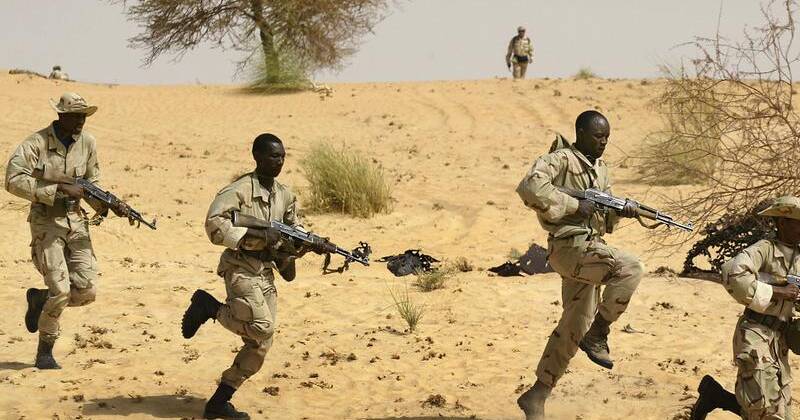
Bamako, Mali – Mali’s military has reported a significant escalation in the country’s long-running insurgency, confirming that armed groups staged a series of “simultaneous attacks” across multiple regions on Tuesday. The coordinated assaults targeted military positions and infrastructure, marking a brazen display of force by militants and further destabilizing the already fragile West African nation, according to an initial report by Al Jazeera.
While details remain scarce and official confirmation on casualties is pending, the Malian army’s statement suggests a level of planning and coordination not often seen in recent months. The attacks reportedly spanned central and northern Mali, regions that have been hotspots of jihadist activity for over a decade. This development underscores the immense security challenges facing Mali’s military junta, which seized power in 2020 and 2021, promising to restore stability.
Coordinated Assaults Signal Growing Militant Sophistication
Sources close to the Malian Armed Forces (FAMa) indicated that the attacks targeted at least three distinct areas: elements of the Mopti region in central Mali, parts of the Ségou region, and potentially locations further north, including areas close to the traditional strongholds of various armed groups. Militants, believed to be heavily armed, reportedly used a combination of vehicle-borne improvised explosive devices (VBIEDs) and direct fire to overwhelm static positions and ambush patrols.
The simultaneous nature of these attacks is particularly concerning for security analysts. It suggests an evolution in militant capabilities, moving beyond isolated skirmishes to a more strategic, multi-front offensive designed to stretch the Malian military’s resources and inflict maximum psychological and physical damage. Such tactics are characteristic of well-organized groups aiming to demonstrate their reach and challenge the state’s authority across vast swathes of territory.
“These are not random acts of violence,” stated Dr. Fatoumata Keita, a regional security expert based in Bamako. “This level of coordination points to significant logistical and operational capacity, likely from one of the major jihadist alliances operating in the Sahel. Their aim is to create chaos, disrupt supply lines, and perhaps even test the resolve of the new military leadership and their strategic partners.”
Uncertainty Over Casualties and Response
As news continues to trickle in from the remote and often inaccessible regions affected, precise figures for casualties remain unconfirmed. However, initial reports from local security sources and humanitarian workers suggest that both military personnel and potentially civilians caught in the crossfire have suffered losses. The Malian army has pledged a swift and robust response, deploying reinforcements and initiating counter-operations, but the sheer scale of the attacks complicates immediate assessment and relief efforts.
The logistical challenges of operating in Mali are immense. Its vast, arid terrain, coupled with limited infrastructure and communication networks, often means that official information is slow to emerge and difficult to verify independently. This vacuum frequently allows rumors to spread, further adding to the climate of fear and uncertainty among local populations who bear the brunt of the violence.
The Shadow of Jihadist Groups
While no group has immediately claimed responsibility, suspicion falls squarely on the two dominant jihadist alliances operating in the region: Jama’at Nusrat al-Islam wal-Muslimin (JNIM), an al-Qaeda affiliate, and the Islamic State in the Greater Sahara (ISGS). Both groups have been vying for control and influence, exploiting ethnic tensions and state weakness to recruit fighters and expand their territorial footprint.
JNIM, formed in 2017 through a merger of several smaller groups, has proven particularly adept at embedding itself within local communities, offering a semblance of order where the state is absent, while simultaneously launching deadly attacks against military and civilian targets. ISGS, on the other hand, is known for its extreme brutality and focus on territorial expansion, often clashing with JNIM as much as with state forces.
Mali’s Precarious Security Landscape
The latest wave of attacks comes at a critical juncture for Mali. The country has been battling a complex insurgency since 2012, when a Tuareg rebellion in the north was hijacked by al-Qaeda-linked militants. Despite a decade of international intervention, including a significant French military presence (Operation Barkhane) and a United Nations peacekeeping mission (MINUSMA), the security situation has steadily deteriorated, spreading from the north to central Mali and spilling over into neighboring Burkina Faso and Niger.
The withdrawal of French forces, completed in 2022, and the ongoing gradual drawdown of MINUSMA at the request of the Malian junta, have created a significant security vacuum. The military government has increasingly turned to Russia for security assistance, including the deployment of personnel widely believed to be linked to the Wagner Group, a private military contractor. However, critics argue that this shift in alliances has yet to yield a decisive improvement in security and has instead complicated international efforts to stabilize the region.
For ordinary Malians, especially those in rural areas, the attacks mean a deepening of an already dire humanitarian crisis. Displacement, food insecurity, and the disruption of essential services are rampant. Schools remain closed in many areas, healthcare facilities are non-existent or dysfunctional, and livelihoods are constantly under threat. The future for millions remains uncertain, trapped between a struggling state and relentless militant groups.
The coordinated assaults serve as a stark reminder of the persistent and evolving threat posed by armed groups in Mali. As the Malian army mobilizes its response, the international community watches nervously, aware that the stability of the entire Sahel region hinges on Mali’s ability to counter this escalating insurgency.