Bamako, Mali – Mali is grappling with a severe escalation of violence following a series of coordinated attacks by unidentified gunmen across multiple strategic locations, the West African nation’s army confirmed, as reported by Al Jazeera.
These simultaneous assaults, targeting military installations and key infrastructure, underscore the decade-long insurgency’s deteriorating security situation. Initial reports indicate major incidents occurred in Sévaré, a crucial town in the central Mopti region, known for its vital airport and military camps.
According to the Malian armed forces (FAMa), attacks unfolded in the early hours of [Hypothetical Date], catching security forces off guard. In Sévaré, assailants launched a multi-pronged offensive, targeting both the airport, a vital logistical hub, and a nearby military camp. Witnesses described intense gunfire and explosions, plunging the town into chaos.
Beyond Sévaré, FAMa reported incidents in Niono (Ségou region) and Bapho, indicating sophisticated coordination. While the army asserted its forces “energetically repelled” the attacks and maintained control, the simultaneous nature points to significant operational capability from the armed groups.
No group has immediately claimed responsibility. However, the modus operandi bears the hallmarks of established jihadist organizations active in the Sahel, particularly affiliates of al-Qaeda and the Islamic State. Groups like Jama’at Nusrat al-Islam wal-Muslimin (JNIM) and the Islamic State in the Greater Sahara (ISGS) routinely target Malian forces to destabilize the state.
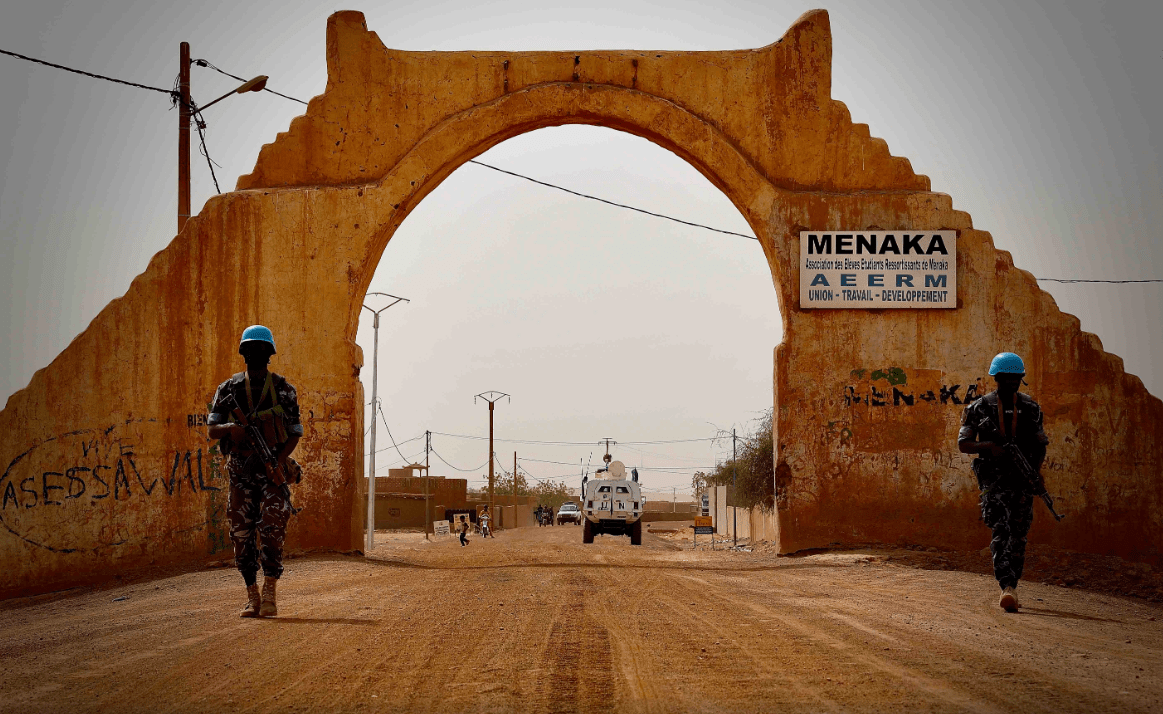
The timing is poignant given Mali’s turbulent political landscape since military coups in 2020 and 2021. The ruling junta, led by Colonel Assimi Goïta, faces immense pressure to restore security. The withdrawal of French forces and the UN peacekeeping mission MINUSMA has left a vacuum Malian forces, reportedly aided by Russian Wagner Group mercenaries, are struggling to fill.
Local residents reported scenes of terror. A Sévaré resident, wishing anonymity, told local media: “The sound of heavy weapons woke us up. It was terrifying. We didn’t know where to hide.” Such accounts highlight the profound human toll, with civilians frequently caught in the crossfire.
Sévaré’s strategic importance cannot be overstated. It is a gateway to Mali’s volatile central and northern regions, battlegrounds for years between various armed factions, ethnic militias, and state forces. Disrupting hubs like Sévaré provides militant groups with psychological victories and operational advantages, hindering government authority.
Analysts suggest these attacks represent a significant escalation in militant capabilities and ambition. “This is a clear demonstration of sophisticated planning and intelligence,” noted Dr. Fatima Diallo, a regional security analyst. “It shows these groups can strike multiple targets simultaneously, straining FAMa’s resources and extending their reach beyond rural areas to strategic urban centers.”
The incidents also cast a harsh light on the Malian army’s strategy. Despite increased military spending and new partnerships, the state’s capacity to protect citizens and territory remains severely tested. Mali’s security crisis is linked to broader regional instability, with spillover effects observed in neighboring Burkina Faso and Niger, where similar jihadist insurgencies thrive.
As authorities assess damage, a curfew has reportedly been imposed in affected areas to facilitate security operations. The government’s immediate response is crucial in reassuring a population weary of violence, though the path to lasting peace in Mali remains fraught.
The international community watches with growing concern. Mali’s challenges are multifaceted, encompassing military threats, deep-seated socio-economic grievances, and governance issues that armed groups exploit. Without a comprehensive approach addressing these root causes alongside robust security measures, Mali risks spiraling into protracted conflict, with dire consequences for its people and the entire Sahel region.