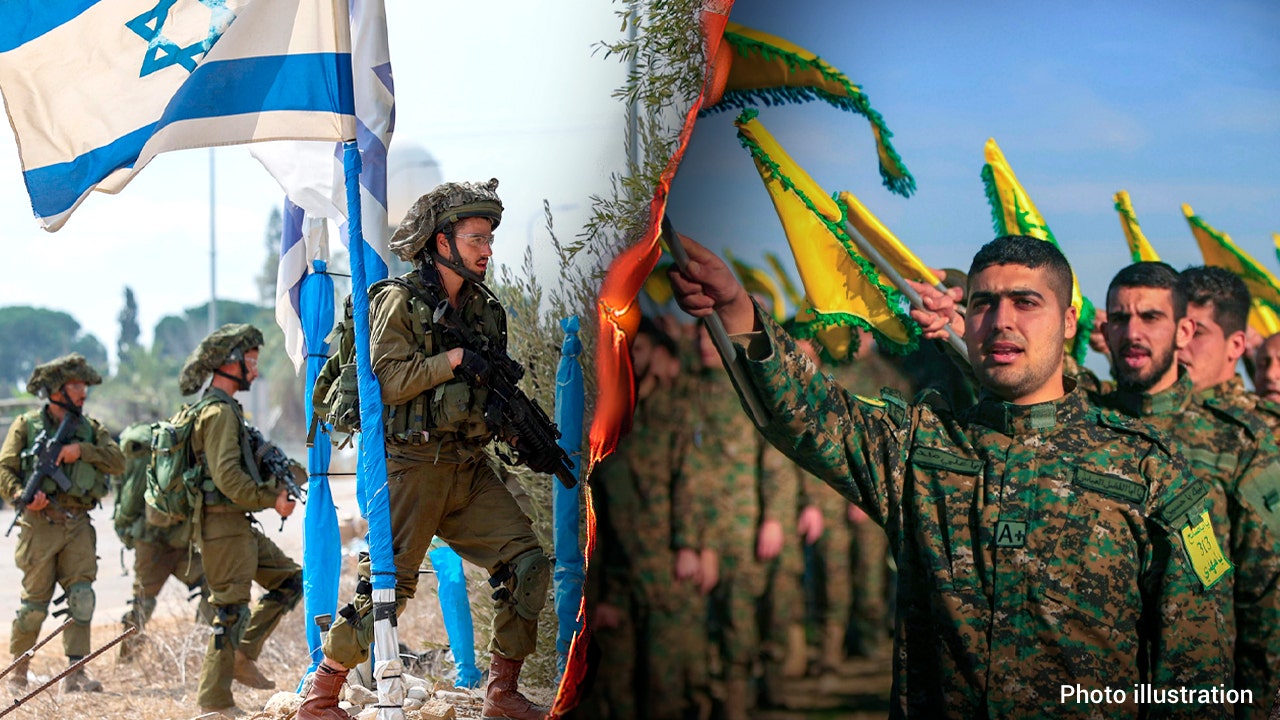
Israel’s Defence Minister Declares Hezbollah Operation ‘Still Not Complete’ Amid Escalating Northern Front Tensions
JERUSALEM – Israel’s Defence Minister Yoav Gallant has declared that the military operation against the Iran-backed Hezbollah militant group in Lebanon is “still not complete,” signalling a potentially prolonged period of engagement on Israel’s northern border. The statement, widely reported by Euronews.com, underscores the ongoing intensity of hostilities, which have dramatically escalated since the October 7 Hamas attacks and the subsequent war in Gaza. Gallant’s remarks suggest that Israel remains committed to its objectives in the north, implying sustained military pressure to address perceived threats from Hezbollah.
This stark declaration comes as the region grapples with unprecedented tension, fueled by daily exchanges of fire across the Israeli-Lebanese frontier, drawing international concern about a wider regional conflagration that could destabilize the entire Middle East.
The Escalating Northern Front
The northern front, a flashpoint for decades, erupted into daily exchanges of fire following the onset of the Gaza conflict. Hezbollah, a powerful Shiite political party and militant group in Lebanon, began launching rockets, drones, and anti-tank missiles into northern Israel in what it describes as support for Hamas and the Palestinian cause. Israel has responded with extensive airstrikes, artillery fire, and targeted assassinations deep inside Lebanese territory, targeting Hezbollah infrastructure, command centres, and operatives.
This tit-for-tat escalation has forced tens of thousands of residents on both sides of the border to evacuate their homes, transforming the once-vibrant border region into a militarized zone. Once thriving towns and villages are now largely deserted, their populations displaced and economies shattered. The international community watches with growing alarm, fearing that the conflict could spiral into a full-scale regional war with catastrophic consequences.
Gallant’s Unwavering Stance
Defence Minister Gallant’s assertion that the operation is “still not complete” was made during a visit to the northern command, where he reviewed the operational readiness of Israeli forces and met with field commanders. His words convey a clear message: Israel’s military campaign against Hezbollah is far from over, and Jerusalem intends to continue its efforts until its strategic objectives are met. While specific details of these objectives often remain classified, they broadly include pushing Hezbollah forces away from the border, dismantling their offensive capabilities, and restoring security for Israeli citizens in the north.
This persistent posture indicates that despite international calls for de-escalation, Israel perceives an existential threat necessitating continued military action. The Israeli government has repeatedly stated its determination to ensure its northern communities are safe from cross-border attacks, implying current engagement will persist until this security gap is closed.
Intensifying Military Engagements
The past months have witnessed a significant intensification of hostilities. Israel has increasingly utilized precision airstrikes, often involving advanced fighter jets and drones, to target Hezbollah sites. These have included rocket launchers, military compounds, weapon storage facilities, and operational command posts. Hezbollah, for its part, has maintained a steady barrage of cross-border attacks, leading to casualties among Israeli soldiers and civilians, as well as significant damage to property and infrastructure in northern Israel. The group has also introduced new tactics and sophisticated weaponry, such as advanced drones and potent anti-tank missiles, showcasing evolving military capabilities.
The constant exchange of fire has transformed villages on both sides into ghost towns, with economic activity grinding to a halt and agricultural lands lying fallow. The agricultural sector, vital to the border region’s economy, has suffered immense losses due to shelling and farmers’ inability to access fields.
Humanitarian Crisis and Displacement
The human cost of this prolonged conflict is immense. On the Israeli side, over 60,000 residents from communities near the Lebanese border have been evacuated and are living in temporary accommodations elsewhere in the country. They face an uncertain future, unable to return home until security is fully restored and the threat of attack is eliminated. In Lebanon, the situation is similarly dire, with the United Nations estimating over 90,000 displaced from southern Lebanon. Many have lost homes, livelihoods, and access to essential services, exacerbating an already fragile economic and social situation.
Hospitals and emergency services in both regions are stretched thin, with the continuous threat of escalation looming large over caught civilian populations. International aid organizations have repeatedly warned of a deepening humanitarian crisis, advocating for a ceasefire and safe passage for aid to reach affected populations.
International Calls for De-escalation and Strategic Implications
The United States, France, and the United Nations have been actively engaged in diplomatic efforts to prevent a wider conflict. Special envoys have visited Beirut and Jerusalem, attempting to broker a ceasefire or de-escalation. Proposals have included a return to UN Security Council Resolution 1701, which ended the 2006 Lebanon War and called for Hezbollah to withdraw its forces north of the Litani River. However, these efforts have largely floundered, as neither side appears willing to compromise without significant concessions. Israel insists on concrete security guarantees, while Hezbollah links its actions to the Gaza conflict and broader regional dynamics, making a separate resolution challenging.
Gallant’s statement implies that Israel’s military campaign against Hezbollah is not merely retaliatory but part of a broader, more strategic effort to fundamentally alter the security landscape in its north. This could involve creating a buffer zone, degrading Hezbollah’s arsenal, or eliminating key command elements. The protracted nature of the conflict signals Israel is prepared for a long haul, potentially running parallel to or beyond operations in Gaza. The risk of miscalculation remains extremely high, with any significant incident having the potential to trigger a full-blown war devastating to both nations and the wider Middle East. The interplay between the Gaza war and the northern front is undeniable; a resolution in one theatre could influence the other, yet the immediate future for Israel’s northern border remains one of entrenched conflict and uncertainty.
Hezbollah’s Resilience and Rhetoric
Hezbollah, led by Hassan Nasrallah, has consistently stated its readiness to confront Israel, framing its actions as a defense of Lebanon and support for Palestinian resistance. The group has demonstrated remarkable resilience and a sophisticated military capability, honed over decades. While Israel claims significant damage to Hezbollah’s infrastructure and personnel, the group continues launching attacks, underscoring the challenge Israel faces in neutralizing its threat without a full-scale ground invasion—an option fraught with immense risks and likely to draw more actors into the conflict. Nasrallah’s speeches often emphasize steadfastness, retaliation, and a willingness to escalate if Israel broadens its attacks or targets specific high-value assets.
Conclusion
Defence Minister Yoav Gallant’s assertion that the military operation against Hezbollah is “still not complete” is a stark reminder of the volatile and unresolved conflict festering on Israel’s northern border. It signifies Israel’s determination to press ahead with its military objectives, despite the immense human cost and the ever-present risk of regional conflagration. As diplomatic efforts falter and the exchange of fire continues daily, the prospect of a lasting peace seems distant. The coming months will likely see continued military action, further displacement, and heightened geopolitical tensions, with the international community struggling to avert a catastrophic wider war in a turbulent region. The ‘incomplete’ operation hangs heavy over the Middle East, a potent symbol of enduring instability and the complex, interconnected nature of its conflicts.