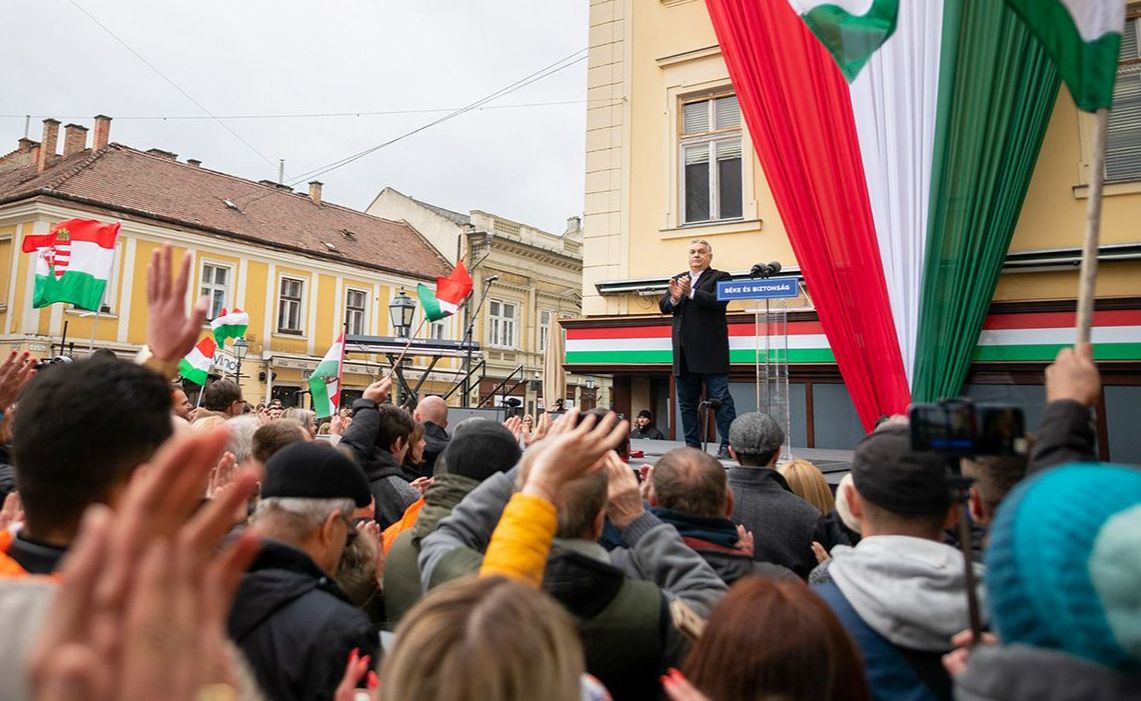
Hungarian Horizon: Investors Weigh a Post-Orban Era as Reuters Reports Landmark Shift
Hungary stands on the precipice of a potentially transformative political era, compelling international investors to re-evaluate their strategies and outlook for the Central European nation. With the long shadow of Viktor Orban’s tenure looming large, a recent Reuters report underscores the growing speculation and analysis among financial circles regarding the country’s future economic and political trajectory in a post-Orban landscape. This landmark shift presents both tantalizing opportunities and significant uncertainties, as market participants size up the potential for a new chapter defined by altered governance, economic policy, and international relations.
Background: A Decade of Distinct Governance
For over a decade, Prime Minister Viktor Orban has been the singular, dominant force in Hungarian politics, shaping its economy, society, and foreign policy with a distinctive brand of "illiberal democracy." His administration has overseen robust economic growth periods, often fueled by foreign investment (particularly in manufacturing), coupled with a consistent pushback against EU institutions, a focus on national sovereignty, and often controversial judicial and media reforms. This highly centralized approach, while providing a degree of stability and clear direction for some investors, has also raised concerns about the rule of law, potential for corruption, and the predictability of policy in an environment perceived to be increasingly nationalistic and less aligned with core EU values. The potential end of this era, whether through electoral defeat, retirement, or other political developments, signifies an unprecedented moment of reckoning for Hungary and its standing in the global economy.
Investor Sentiment: A Mixed Bag of Hope and Caution
Investors are approaching this potential transition with a blend of caution and anticipation. On one hand, the prospect of a more conventional, market-friendly government, potentially one that seeks to mend fences with the European Union, is seen as a major positive. "A shift towards more orthodox economic policy and improved relations with Brussels could unlock significant EU funds, providing a much-needed boost to the Hungarian economy and reducing sovereign risk," comments Anna Kovacs, a senior analyst from a major London-based investment bank. Such a government might also bring greater transparency, strengthen independent institutions, and foster a more predictable regulatory environment – factors universally appealing to foreign capital.
However, the path to such an outcome is fraught with potential pitfalls. The immediate aftermath of Orban’s departure could trigger a period of political instability, as various factions vie for power. Concerns exist about the potential for policy reversals that could disrupt existing business models, particularly for those companies that have benefited from current government incentives or close ties. The challenge of unwinding years of highly personalized governance and reforming entrenched state structures would be immense. Furthermore, any new government would inherit significant economic challenges, including persistent high inflation, a substantial budget deficit, and the need to manage public debt while navigating a complex global economic environment still reeling from geopolitical shocks.
Economic Outlook and Sectoral Impact
Hungary’s economy, while resilient in some aspects, has recently grappled with high energy prices, a volatile forint, and inflation rates among the highest in the EU. A post-Orban government would face immediate pressure to stabilize macroeconomic indicators. Analysts suggest a potential shift towards fiscal consolidation, a more independent central bank, and efforts to diversify export markets beyond a heavy reliance on Germany and the automotive sector. This could involve exploring new trade partnerships and fostering innovation in less traditional sectors.
Sectors like manufacturing, particularly the automotive industry which has seen substantial foreign direct investment from German and Asian firms, would keenly watch for continuity or changes in investment incentives and labor policies. The energy sector, deeply intertwined with geopolitical considerations and Russia, could also see significant re-evaluation of its strategic direction. Tech and services, which thrive on open markets and skilled labor, might find a more outward-looking, EU-aligned government particularly conducive to growth. Crucially, the restoration of access to frozen EU cohesion funds, contingent on rule-of-law reforms, could inject billions into infrastructure, green energy, and digital transformation projects, providing significant impetus for various industries and boosting overall economic competitiveness.
The Political Conundrum and EU Relations
The question of succession or the nature of an opposition-led government remains largely hypothetical but intensely debated. Any new political formation would need to navigate the legacy of Orban’s Fidesz party, which has deeply entrenched itself in various layers of public life and state institutions. The transition could be smooth if an internal Fidesz successor maintains a degree of continuity while signaling a moderate shift, or it could be turbulent if a disparate opposition coalition takes power, potentially leading to policy paralysis and prolonged uncertainty in the short term.
Crucially, the relationship with the European Union would be a paramount consideration. Orban’s government has frequently clashed with Brussels over democratic standards, migration, and budgetary issues, leading to billions in frozen EU funds. A new leadership would likely face immediate pressure to address these rule-of-law concerns to unlock vital financial resources. Improved EU relations could also enhance Hungary’s international standing, facilitate trade, and attract further investment from EU member states, positioning the country more centrally within the bloc’s economic framework.
Expert Perspectives: Navigating the Unknown
"While the exact timing and nature of a post-Orban era remain speculative, investors are already factoring in the probability of change and its potential ramifications," notes Dr. Gabor Szabo, a senior economist specializing in Central and Eastern European markets. "The long-term trajectory for Hungary could see it re-embrace core European values, which would naturally improve investor confidence and credit ratings. However, the short-term could be characterized by volatility as the political landscape recalibrates and new policy directions emerge." Others emphasize the absolute necessity for any successor government to demonstrate genuine commitment to reforms, particularly concerning institutional independence and anti-corruption measures, to truly win over skeptical international markets and ensure sustainable capital inflow.
Challenges and Opportunities: A Balancing Act
The challenges are clear: managing a potentially unstable political transition, addressing persistent economic imbalances exacerbated by global crises, and repairing strained international relationships. Yet, the opportunities are equally compelling: a potential return to more orthodox economic governance, increased access to vital EU funding, a stronger rule of law framework, and a renewed emphasis on democratic institutions could unlock significant untapped potential within Hungary, fostering sustainable growth and attracting a broader spectrum of international investment less deterred by governance concerns.
Conclusion: High Stakes on the Horizon
Hungary finds itself at a pivotal juncture. The prospect of a future beyond the indelible mark of Viktor Orban is a topic of intense discussion in boardrooms and financial centers globally. As Reuters highlighted, investors are not merely observing; they are actively sizing up a landscape where the old certainties may give way to new dynamics. The coming years will reveal whether Hungary can successfully navigate this landmark chapter, transforming potential turbulence into a new era of stability, prosperity, and renewed international trust. The stakes are undeniably high, both for Hungary’s citizens and for the global investors keenly watching its evolving horizon.