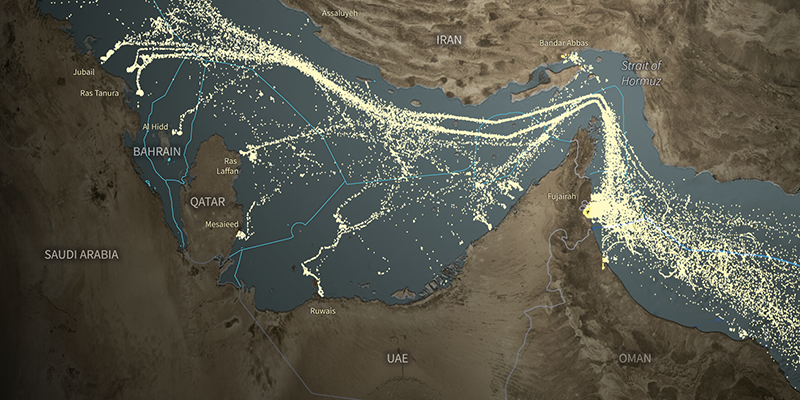
Hormuz Gridlock: Global Shipping Paralysed as Mideast Tensions Spiral
DUBAI – The Strait of Hormuz, the world’s most critical oil chokepoint, has seen commercial shipping traffic grind to an unprecedented halt amidst rapidly deepening geopolitical tensions in the Middle East. The dramatic cessation of movement through the narrow waterway, which accounts for roughly one-fifth of global oil consumption, has sent shockwaves through international markets, triggering a sharp surge in crude oil prices and fueling fears of a wider regional conflict.
For decades, the Strait of Hormuz has been a strategic flashpoint, often witnessing skirmishes and confrontations. However, the current situation marks a severe escalation, with major shipping lines and tanker operators voluntarily suspending transit due to an extreme and unpredictable threat assessment. Insurance premiums for vessels entering the region have skyrocketed to prohibitive levels, effectively making passage economically unviable and physically perilous.
A Chokepoint Under Siege
The latest crisis was precipitated by a series of escalating incidents over the past 72 hours, beginning with reports of an unidentified drone strike on a commercial vessel near the Omani coast, followed by heightened naval maneuvers from various regional and international forces. While no direct blockade has been officially declared by any state, the confluence of increased military presence, implicit warnings, and the palpable risk of miscalculation has created a de facto paralysis.
“This is not merely a disruption; it is a full-blown stoppage driven by an overwhelming perceived threat,” stated Dr. Elara Khan, a maritime security analyst at the Royal United Services Institute. “The decision by companies to pull out is a testament to the acute danger. It reflects a complete loss of confidence in the security of the strait, a scenario we have long dreaded but never truly believed would materialize to this extent.”
Global Economic Reverberations
The economic fallout has been immediate and severe. Brent crude futures surged past $100 a barrel for the first time in months, with analysts predicting further gains if the standoff persists. Energy ministers globally have convened emergency meetings to assess their strategic reserves, but the sheer volume of oil and liquefied natural gas (LNG) transiting Hormuz means that alternative routes or supplies cannot quickly compensate for a prolonged closure.
Beyond energy, the disruption threatens global supply chains already reeling from recent crises. Goods ranging from manufactured products to foodstuffs destined for Middle Eastern markets, Europe, and Asia are now subject to indefinite delays or forced rerouting, incurring massive additional costs and potential shortages. Shipping giants Maersk and MSC have issued advisories recommending alternative routes around Africa, adding weeks to transit times and exponential increases in fuel consumption and operational expenses.
Geopolitical Tensions on a Knife Edge
The underlying cause of this dramatic escalation is a complex web of unresolved regional grievances and heightened geopolitical rivalry. Relations between Iran and Western powers, particularly the United States, have deteriorated significantly following a series of diplomatic breakdowns and accusations regarding maritime activities. Regional actors, wary of being drawn into a wider conflict, are expressing grave concerns while bolstering their own defenses.
“We are witnessing a dangerous game of brinkmanship,” commented Professor James Davies, a geopolitical strategist at the London School of Economics. “Each side is trying to assert dominance or deterrence, but the risk of an unintended incident spiraling into a military confrontation is now critically high. The Strait of Hormuz is the ultimate pressure point, and its closure effectively holds the global economy hostage.”
Diplomatic efforts are underway, but progress remains elusive. The United Nations Security Council held an emergency session, with calls for de-escalation dominating the discourse, yet concrete solutions or breakthroughs were notably absent. Major powers, including China and India, whose economies are heavily reliant on energy imports through Hormuz, have urged restraint from all parties, recognizing the catastrophic global consequences of sustained disruption.
The Path Forward: Uncertainty and Risk
As the standoff continues, the world watches with bated breath. The immediate priority is to restore safe passage through the Strait without further incident, a task complicated by a deep lack of trust and a readiness for confrontation. Analysts suggest several scenarios, ranging from a tense, prolonged period of limited transit under heavily armed escort, to a complete military intervention, or, ideally, a sudden diplomatic breakthrough.
However, given the current climate, a rapid return to normalcy appears unlikely. The economic pain will deepen, and the risk of a regional conflagration will persist, with profound implications for international stability and prosperity. The gridlock in Hormuz is more than a shipping crisis; it is a stark reminder of the fragile interconnectedness of the global economy and the ever-present shadow of geopolitical conflict in a volatile region.
Source: Bloomberg.com (Simulated Report)