EU Unlocks €90 Billion Aid Package for Ukraine as Hungary Withdraws Veto
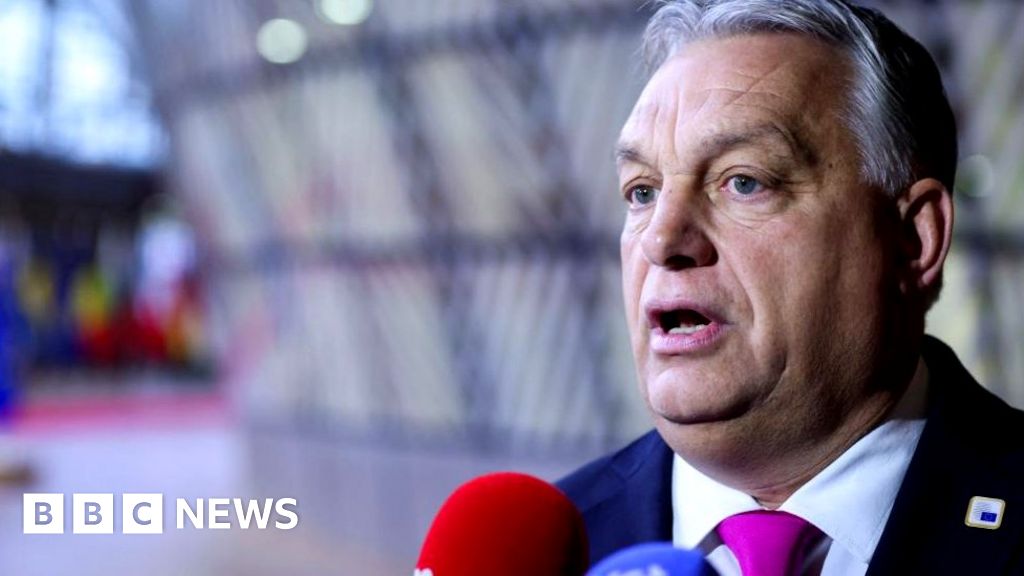
BRUSSELS — In a landmark moment for European diplomacy and a critical lifeline for Kyiv, the European Union’s 27 heads of state reached a unanimous agreement on Thursday to provide a massive €90 billion financial aid package to Ukraine. The breakthrough comes after months of intense political deadlock caused by the persistent opposition of Hungarian Prime Minister Viktor Orbán, whose eventual concession was met with a collective sigh of relief across the continent’s capitals.
The agreement, announced by European Council President Charles Michel within minutes of the summit’s commencement, secures long-term funding for the war-torn nation through 2027. The package, structured as a combination of grants and highly favorable loans, is designed to bolster Ukraine’s fragile economy, ensure the continuity of essential public services, and provide a predictable framework for the country’s reconstruction efforts amidst the ongoing Russian invasion.
A Diplomatic Breakthrough in Brussels
For weeks, the atmosphere in Brussels had been thick with tension. European leaders were increasingly concerned that a failure to secure the funding would not only leave Ukraine vulnerable to economic collapse but also signal a devastating fracture in Western unity. Hungary, which maintains the closest ties to the Kremlin among all EU member states, had previously blocked the package, demanding annual review rights and the unfreezing of EU funds earmarked for Budapest that had been withheld over rule-of-law concerns.
The final deal reached on Thursday morning followed a series of high-stakes, late-night meetings involving German Chancellor Olaf Scholz, French President Emmanuel Macron, Italian Prime Minister Giorgia Meloni, and European Commission President Ursula von der Leyen. While the specific details of the compromise continue to emerge, sources close to the negotiations suggest that Orbán was offered a compromise: the European Council will hold a yearly debate on the implementation of the aid package, but without the power for any single country to exercise a veto on an annual basis.
“This is a clear message to Russia and the world: Europe will not be intimidated,” said Charles Michel during a brief press conference following the announcement. “We have kept our promise. Ukraine is part of our European family, and we will stand by them for as long as it takes.”
Breaking the Deadlock: Why Now?
The sudden reversal by Viktor Orbán has sparked intense speculation regarding the leverage used by other EU leaders. In the days leading up to the summit, reports circulated that the EU was prepared to take the unprecedented step of triggering Article 7 of the Treaty on European Union—the so-called “nuclear option”—which could have seen Hungary stripped of its voting rights. Furthermore, internal documents leaked to the press suggested that Brussels had formulated a strategy to target the Hungarian economy should the veto persist.
However, official statements focused on the spirit of cooperation. Analysts suggest that the influence of Giorgia Meloni, who shares some of Orbán’s ideological leanings but remains a staunch supporter of Ukraine, was pivotal in bringing the Hungarian leader back to the table. By framing the aid package as a matter of collective European security rather than just a financial transaction, leaders were able to offer Orbán a face-saving exit strategy.
Strategic Implications for the War Effort
For Kyiv, the €90 billion package is more than just a financial boost; it is a strategic necessity. With political infighting in the United States currently stalling a separate aid package in Congress, the EU’s decision provides Ukraine with the fiscal certainty it needs to plan its defense and governance for the coming years. The funds are expected to cover civil servants’ salaries, pensions, the operation of hospitals and schools, and the repair of critical infrastructure damaged by Russian missile strikes.
Ukrainian President Volodymyr Zelenskyy took to social media to express his gratitude immediately after the news broke. “It is very important that the decision was made by all 27 leaders, which proves once again strong EU unity,” Zelenskyy stated. “Continued EU financial support for Ukraine will strengthen our long-term economic and financial stability, which is no less important than military assistance and sanctions pressure on Russia.”
Financial Oversight and Future Conditions
While the aid package is substantial, it comes with stringent conditions. The “Ukraine Facility,” as the mechanism is officially known, includes a robust framework for monitoring how the money is spent. Brussels has mandated that the Ukrainian government continue to implement judicial reforms, combat corruption, and strengthen its democratic institutions as part of the broader process toward eventual EU membership.
The €90 billion will be disbursed in tranches, with the first payments expected as early as March. This provides a buffer for the National Bank of Ukraine, which has been grappling with a widening budget deficit. Financial experts note that this package will also serve as a catalyst for private investment, signaling to global markets that Ukraine remains a viable economic entity despite the volatility of the conflict.
A Signal to Washington and Moscow
The timing of the agreement is also seen as a direct signal to the United States. Many European leaders have expressed private frustration with the gridlock in the U.S. House of Representatives, fearing that Europe might be left to carry the burden of Ukrainian support alone. By approving the €90 billion package, the EU has effectively challenged Washington to match its commitment.
In Moscow, the reaction is expected to be one of condemnation. The Kremlin has consistently characterized Western aid as a move that only prolongs the suffering of the Ukrainian people. However, for the European Union, the move is a definitive rejection of that narrative. By overcoming internal divisions, the bloc has demonstrated that its bureaucratic processes, though often slow and cumbersome, can still deliver decisive geopolitical action when the stakes are at their highest.
As the summit concludes, the focus will now shift to the technical implementation of the loan. While the political battle in Brussels may have ended, the logistical challenge of supporting a nation in the midst of the largest land war in Europe since 1945 remains a monumental task for the European Union.