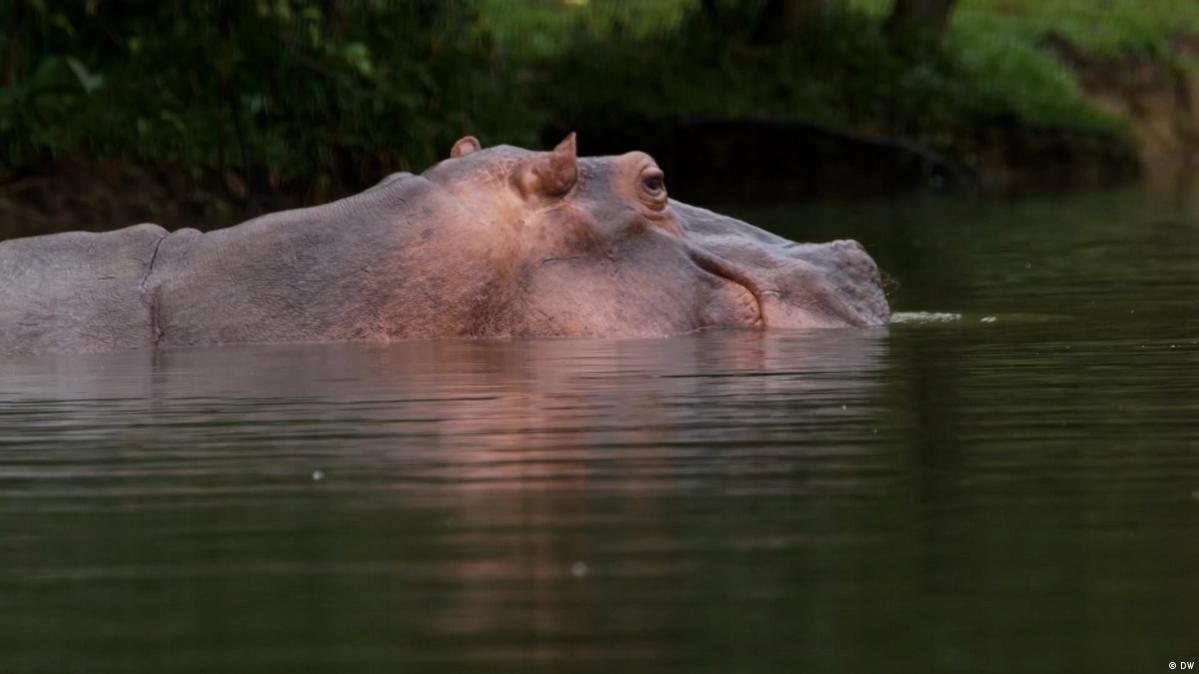
Colombia Faces Tough Choice: Culling Hippos, a Legacy of Pablo Escobar
BOGOTÁ, Colombia – In a move that highlights the enduring and unexpected ecological legacy of notorious drug lord Pablo Escobar, Colombia has announced plans to cull up to 80 hippopotamuses. The decision, revealed by environmental authorities, marks a significant escalation in efforts to control a burgeoning population of the massive mammals, which have multiplied exponentially since their illegal introduction decades ago and are now recognized as an invasive species posing severe threats to local ecosystems and human safety.
The hippos, originally imported by Escobar in the 1980s for his private zoo at Hacienda Nápoles, represent a unique and complex conservation challenge. After his death in 1993, most of his exotic animals were relocated, but four hippos were left behind. Thriving in the warm climate and abundant water sources of Colombia’s Magdalena River basin, with no natural predators, their numbers have exploded from those initial four to an estimated population exceeding 160, and potentially reaching over 200 within a decade if left unchecked. This rapid proliferation has transformed them from an oddity into a serious environmental crisis.
An Unforeseen Ecological Catastrophe
The hippos, often seen as docile in popular culture, are in reality one of Africa’s most dangerous animals. In Colombia, their presence has wreaked havoc on freshwater ecosystems. Their enormous size and ravenous appetites mean they consume vast amounts of vegetation, fundamentally altering aquatic habitats. More critically, their waste, rich in nitrogen and phosphorus, pollutes rivers and lakes, leading to eutrophication – a process that depletes oxygen levels and can result in widespread fish kills and harm to other aquatic life. This impact directly threatens native species, including the critically endangered manatee and various fish species crucial to local livelihoods.
“They are incredibly resilient and have found ideal conditions to reproduce here, but their presence is profoundly disrupting the delicate balance of our wetlands,” explained David Echeverri López, head of the environmental authority Cornare’s natural resources division, in a statement to the press. “We are seeing significant changes in water chemistry and structure, which are detrimental to our native biodiversity.”
Threats to Human Safety and Livelihoods
Beyond the environmental damage, the hippos pose direct risks to human communities. Incidents of hippos charging boats, attacking people, and destroying crops have become increasingly common, particularly in the Antioquia department where Hacienda Nápoles is located. Though no human fatalities have been directly attributed to the hippos in Colombia yet, their aggressive and territorial nature makes encounters highly dangerous.
Fishermen and local residents often find their traditional fishing grounds disturbed and their safety compromised. Children playing near rivers are particularly vulnerable. The animals can also transmit diseases, raising further public health concerns for communities living in close proximity to their growing habitats.
The Government’s Difficult Decision
For years, Colombian authorities have grappled with how to manage the “cocaine hippos.” Early attempts at control focused on sterilization, a costly, dangerous, and logistically challenging endeavor given the hippos’ size and semi-aquatic nature. Each sterilization procedure can cost upwards of $10,000 USD and requires specialized equipment and expertise. While some hippos have been sterilized – estimated to be around 40 individuals so far – the pace of reproduction far outstrips these efforts.
Relocation has also been explored, with proposals to move hippos to zoos and sanctuaries in other countries, including India and Mexico. While a small number have been successfully relocated, finding suitable homes for dozens of large, aggressive animals with specific habitat requirements has proven exceptionally difficult and expensive. The logistical hurdles of capturing and transporting such large animals are immense, often requiring tranquilizer darts and heavy machinery.
Recognizing the urgency and the limitations of non-lethal methods, the Ministry of Environment declared the hippos an invasive species in 2023, paving the way for more drastic measures. This declaration formally allows for their control and management, including culling. The current plan involves culling up to 80 hippos, primarily through euthanasia by trained sharpshooters, with a continued, though smaller, focus on sterilization and relocation for remaining populations.
“We understand that this is a controversial decision and one that evokes strong emotions,” stated Susana Muhamad, Colombia’s Minister of Environment and Sustainable Development. “However, we have exhausted other options. The scientific evidence is clear: the environmental damage is irreversible, and the risk to human lives is increasing. We have a responsibility to protect our native species and our people.”
An Unsettling Precedent and a Global Lesson
The culling program is set to commence in the coming weeks and months, targeting populations that are most problematic or pose the highest risk. The announcement has, predictably, sparked outrage among animal welfare advocates, both domestically and internationally. Critics argue that more resources should be invested in non-lethal alternatives and that culling is a cruel and short-sighted solution.
However, environmental scientists and conservationists largely support the government’s difficult decision, emphasizing that the situation has reached a critical point where inaction would lead to far greater ecological devastation. The Colombian hippo crisis serves as a stark reminder of the long-term, often unpredictable, consequences of introducing non-native species into new environments, particularly those with a criminal origin like Escobar’s illicit imports.
The story of Colombia’s “cocaine hippos” is more than just an exotic wildlife tale; it’s a profound lesson in ecological responsibility, the challenges of invasive species management, and the enduring ripple effects of human actions – even those from decades past. As the program unfolds, the world will be watching to see how Colombia navigates this ethically complex and ecologically imperative challenge.