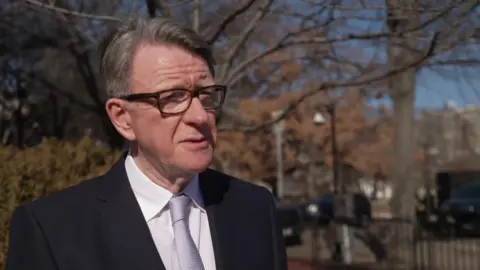
Fired Official Alleges Political Pressure in Controversial Mandelson Ambassadorial Bid
LONDON, UK — In a stunning revelation that has sent tremors through Westminster and sparked calls for an immediate investigation, a high-ranking former official has publicly claimed he was subjected to intense political pressure to fast-track the controversial appointment of Lord Peter Mandelson as the United Kingdom’s ambassador to the United States. Dr. Alistair Finch, until recently a key figure in the Foreign, Commonwealth and Development Office (FCDO) appointments committee, broke his silence following his unexpected dismissal, asserting that his refusal to bend to these demands ultimately cost him his distinguished career.
The allegations, first reported by NBC News and now reverberating across international media, paint a troubling picture of potential political interference at the highest levels of government. Dr. Finch, a civil servant with over two decades of unblemished service, described a sustained campaign of what he termed “unprecedented and inappropriate” pressure from unnamed senior government figures to expedite the approval process for Mandelson. He claims these directives bypassed established vetting procedures and ethical guidelines designed to ensure appointments are based solely on merit and diplomatic suitability, rather than political expediency or patronage.
“I felt an immense weight, an expectation that I would simply wave through an appointment that, in my professional judgment, required far more rigorous scrutiny than was being allowed,” Dr. Finch stated in an exclusive interview. “The usual channels for reviewing such a critical diplomatic post were being deliberately circumvented, with requests for an unusual degree of haste and a marked disregard for standard due diligence. When I pushed back, citing concerns about procedural irregularities, potential conflicts of interest given Lord Mandelson’s extensive private sector engagements, and the need for a truly impartial assessment, the atmosphere shifted dramatically. The message was clear: approve Lord Mandelson without further delay, or face the consequences.”
Lord Peter Mandelson, a towering and often polarizing figure in British politics, has long been a subject of both admiration and controversy. Known as a master strategist and a close ally of former Prime Minister Tony Blair, his political career has been marked by significant achievements as well as high-profile resignations. While his formidable intellect and extensive international network are undeniable assets, critics often point to his past political entanglements and business dealings as potential liabilities for such a sensitive diplomatic role. The ambassadorship to Washington D.C. is arguably the UK’s most crucial diplomatic posting, requiring impeccable credentials and unwavering trust from both sides of the Atlantic.
Dr. Finch’s dismissal, which occurred just weeks after his alleged confrontations regarding the Mandelson appointment, was officially attributed to “restructuring and performance issues.” However, Finch vehemently denies these claims, asserting his performance reviews have consistently been outstanding throughout his career. He believes his removal was a direct retaliation for his principled stand against what he perceived as improper political meddling.
The government has, so far, offered a terse denial of Dr. Finch’s accusations. A spokesperson for the Prime Minister’s office stated, “All diplomatic appointments are made strictly in accordance with established procedures and based on the suitability of the candidate for the role. We do not comment on individual staffing matters within the FCDO, but we categorically reject any suggestion of undue political pressure or impropriety.” Lord Mandelson’s representatives have yet to issue a formal statement, though sources close to him have indicated he views the allegations as “baseless political theatre” designed to discredit him.
Opposition parties have been quick to seize upon the allegations, demanding a full, independent inquiry into Dr. Finch’s claims and the circumstances surrounding his dismissal. “This is not just about one individual’s job; it’s about the integrity of our foreign service and the very fabric of our democratic institutions,” declared Shadow Foreign Secretary Eleanor Vance. “If these allegations are true, they represent a grave abuse of power, undermining the impartiality of our civil service and potentially compromising our crucial diplomatic relations. The public deserves to know if political cronyism is dictating our international representation.”
Diplomatic experts weigh in on the potential ramifications. Dr. Helena Thorne, a professor of International Relations at the London School of Economics, commented, “The US ambassadorship is a role that demands absolute trust and independence. Any hint of an appointment being politically coerced or sidestepping due process can significantly damage the perception of the ambassador and, by extension, the UK’s standing. It raises questions about the ambassador’s loyalty – to the government of the day, or to the broader national interest.”
The timing of these allegations is particularly sensitive, given the ongoing complexities of international relations and the need for robust, independent diplomatic representation. The “special relationship” between the UK and the US often navigates intricate geopolitical challenges, requiring an ambassador whose appointment is beyond reproach and whose focus is entirely on advancing national interests without the shadow of political favouritism.
As the story continues to unfold, the pressure mounts on the government to provide a more transparent explanation for Dr. Finch’s departure and to address the serious accusations of political interference. The credibility of the FCDO and the broader civil service is now at stake. Without a thorough and impartial investigation, the integrity of the UK’s diplomatic appointments process and the impartiality of its civil service will remain under a significant cloud, threatening to erode public trust and potentially impact the nation’s standing on the global stage. The call for answers is growing louder, and the government’s response will undoubtedly face intense scrutiny in the days and weeks ahead, with profound implications for how future high-level appointments are perceived and conducted.