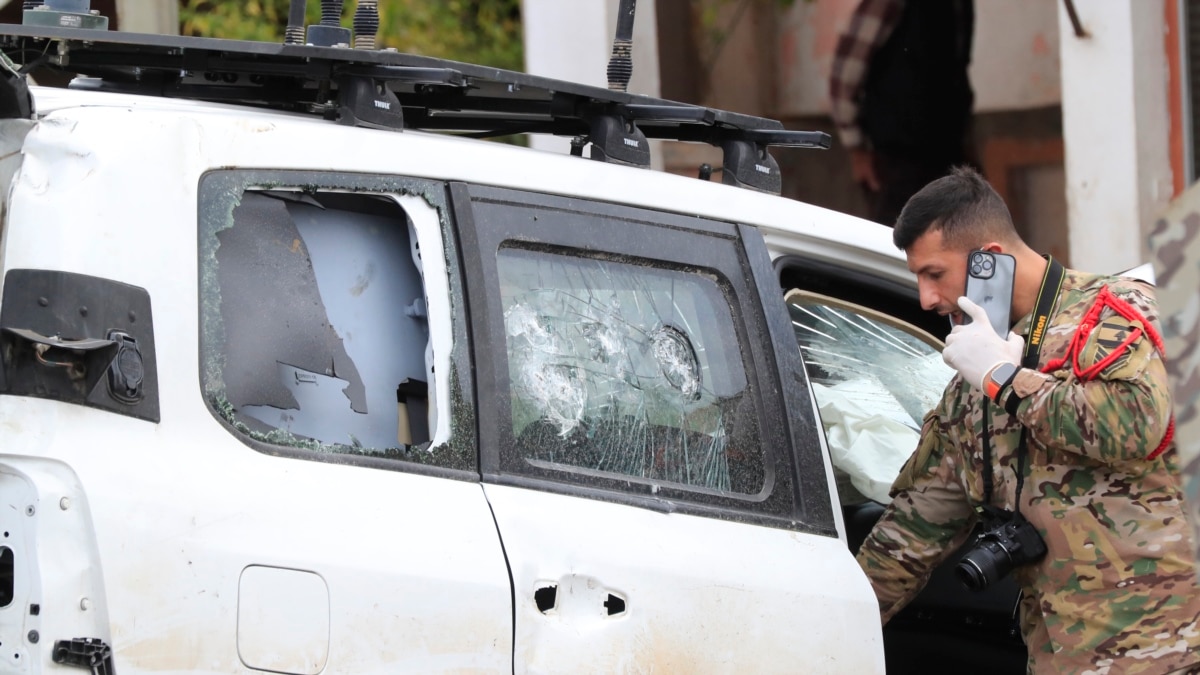
French Peacekeeper Killed in Deadly Attack on UN Mission in Southern Lebanon
BEIRUT, LEBANON – A French soldier serving with the United Nations Interim Force in Lebanon (UNIFIL) was killed, and another critically wounded, following a roadside bomb attack on their convoy in southern Lebanon on Tuesday, officials confirmed. The incident, which occurred in the volatile region near the Israeli border, has drawn widespread condemnation and highlighted the persistent dangers faced by international peacekeepers operating in one of the world’s most sensitive areas.
The attack took place in the early afternoon as the UNIFIL patrol was conducting a routine surveillance mission near the town of Rmeish, a predominantly Christian village in the Tyre district. According to preliminary reports from UNIFIL headquarters and French military sources, an improvised explosive device (IED) detonated as the armoured vehicle passed by, causing immediate fatalities and severe injuries. The identity of the fallen soldier has not yet been publicly released, pending notification of next of kin, but French President Emmanuel Macron swiftly issued a statement expressing his profound grief and solidarity with the soldier’s family.
“France condemns with the utmost firmness the cowardly attack that claimed the life of one of our soldiers committed to peace in Lebanon,” President Macron’s office stated. “Our thoughts are with his family, loved ones, and his wounded comrade. France remains steadfast in its commitment to the security and stability of Lebanon and the vital mission of UNIFIL.”
UNIFIL, established in 1978, plays a critical role in monitoring the cessation of hostilities between Lebanon and Israel, assisting the Lebanese armed forces, and ensuring humanitarian access in its area of operations. Its mandate was significantly expanded following the 2006 war between Israel and Hezbollah, tasking it with ensuring the area between the Litani River and the Blue Line (the demarcation line between Lebanon and Israel) is free of any unauthorized armed personnel, assets, and weapons. The force comprises nearly 10,000 peacekeepers from over 40 countries, with France being one of the largest and most historically significant contributors.
The head of UNIFIL, Major General Aroldo Lázaro, condemned the attack as a “heinous act” and a direct assault on the mandate of peace. “This tragic incident underscores the extreme risks our peacekeepers face daily in their unwavering commitment to stability in southern Lebanon,” Major General Lázaro said in a statement. “We extend our deepest condolences to the family, friends, and military of the fallen peacekeeper and wish a swift recovery to the injured. An immediate and thorough investigation has been launched in cooperation with the Lebanese authorities to ascertain the full circumstances of this attack and to bring those responsible to justice.”
Lebanese Prime Minister Najib Mikati also expressed his condolences and denounced the attack. “Lebanon stands firmly against any act of aggression targeting the UNIFIL forces, who are our partners in maintaining peace and security in the south,” Mikati’s office announced. “We are fully cooperating with UNIFIL and our security agencies have initiated an urgent investigation to identify and apprehend the perpetrators of this criminal act.”
Southern Lebanon has long been a hotbed of regional tensions, primarily due to the presence and influence of Hezbollah, the Iran-backed Shiite militant group and political party, and its proximity to the Israeli border. While UNIFIL’s presence is generally accepted by local communities, incidents involving peacekeepers, though rare, are a stark reminder of the complex geopolitical landscape. Previous attacks on UNIFIL have involved IEDs, small arms fire, and in some cases, hostile demonstrations by local residents objecting to their patrols or perceived infringements on their areas of control.
The last fatal attack on UNIFIL peacekeepers occurred in December 2022, when an Irish soldier was killed and three others injured after their convoy came under fire in the village of Al-Aqbieh. Investigations into that incident are still ongoing, highlighting the difficulties in prosecuting such cases in a region often characterized by opaque power structures and deep-seated grievances.
The current attack comes at a time of heightened regional instability, with ongoing tensions between Israel and various proxy groups in the wider Middle East. The presence of UNIFIL is considered crucial for de-escalation and preventing potential flare-ups along the Blue Line, a task that becomes even more challenging when the peacekeepers themselves become targets. The incident serves as a grim reminder of the sacrifices made by individuals from around the world to uphold peace in troubled zones.
As the investigation unfolds, international calls for accountability are mounting. France, a permanent member of the UN Security Council, is expected to press for a robust response and ensure that the perpetrators are brought to justice, sending a clear message that attacks on UN peacekeepers will not be tolerated. The tragedy underscores the imperative for all parties in the region to respect UNIFIL’s mandate and ensure the safety and security of its personnel, who are dedicated to fostering stability in an otherwise fragile peace.