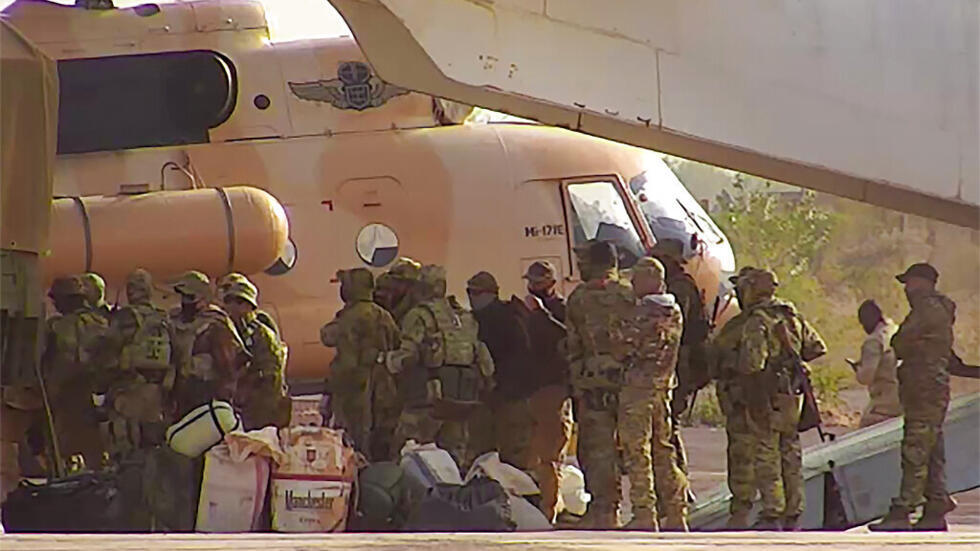
Strategic Defeat in the Sahara: Mali Rebels Inflict Massive Losses on Junta and Russian Mercenaries
A lethal ambush near the Algerian border marks the deadliest engagement for Russian forces in Africa, casting doubt on the junta’s security strategy.
In the desolate borderlands of northern Mali, where the shifting sands of the Sahara meet the jagged frontiers of Algeria, a military disaster has unfolded that threatens to reshape the geopolitical landscape of West Africa. Over the past week, reports and harrowing visual evidence have emerged of a devastating ambush conducted by Tuareg separatist rebels against a combined convoy of the Malian army and Russia’s Africa Corps—the successor to the notorious Wagner Group. The scale of the defeat, analysts say, represents the most significant blow to Russian interests in the Sahel since Moscow began its aggressive expansion into the continent’s security architecture.
The battle took place near the remote town of Tinzaouaten. For days, the Malian Armed Forces (FAMa) and their Russian counterparts had been pushing northward, attempting to reclaim territory from the Permanent Strategic Framework for Peace, Security, and Development (CSP-DPA), an alliance of predominant Tuareg rebel groups. However, the expeditionary force was caught in a pincer movement, exacerbated by a sudden and violent sandstorm that grounded the junta’s superior air assets. What followed was a multi-day slaughter that has left dozens of Russian mercenaries and Malian soldiers dead, with dozens more captured or missing in the dunes.
The End of the Mirage of Invincibility
For the military junta led by Colonel Assimi Goïta, who seized power in a series of coups starting in 2020, the partnership with Russia was framed as a more effective alternative to the departing French and United Nations peacekeeping missions. The promise was simple: Russian muscle would achieve what Western diplomacy and conditional aid could not—the total restoration of state sovereignty over the restive north. For several years, this narrative gained traction as Wagner-backed forces reclaimed key towns like Kidal. Yet, the carnage at Tinzaouaten has shattered the mirage of invincibility surrounding the Russian presence.
Videos circulating on social media, later verified by independent intelligence monitors and surviving members of the Russian contingent, show the scorched remains of mine-resistant vehicles and the bodies of white fighters scattered across the desert. Among the confirmed dead is reported to be Nikita Fedyanin, the administrator of ‘Grey Zone,’ a prominent pro-Wagner Telegram channel that acted as a primary propaganda arm for Russian mercenary activities worldwide. His death, along with a significant portion of a veteran platoon, signals a loss of institutional memory and elite tactical capability for the Africa Corps.
A Shifting Tactical Landscape
The defeat is not merely a localized tactical failure; it highlights a profound miscalculation in the junta’s counter-insurgency strategy. By prioritizing raw kinetic force over the political reconciliations outlined in the now-defunct 2015 Algiers Accord, the Malian government has pushed the Tuareg separatists back into a full-scale war. Perhaps more concerning for regional stability is the opportunistic involvement of Al-Qaeda-linked militants, specifically the Group for the Support of Islam and Muslims (JNIM), who also claimed participation in the later stages of the engagement.
While the CSP-DPA and JNIM remain ideologically at odds, the common goal of expelling the ‘Wagner invaders’ has created a de facto battlefield synergy. This convergence complicates the security picture for neighboring countries like Algeria and Mauritania, who fear a spillover of violence and a humanitarian crisis as displaced populations flee the intensified fighting. The use of sophisticated tactics by the rebels, including the effective deployment of small drones and coordinated IED strikes, suggests that the insurgents have adapted to the Russian style of mechanized warfare far faster than anticipated.
Moscow’s Africa Corps Under Pressure
The incident comes at a sensitive time for the Kremlin. Since the death of Yevgeny Prigozhin last year, the Russian Ministry of Defense has been working to bring Wagner’s sprawling African operations under formal state control through the ‘Africa Corps.’ This transition was intended to provide more stability and transparency to Russia’s client states in the ‘Alliance of Sahel States’ (Mali, Burkina Faso, and Niger). However, the loss of dozens of experienced operatives in a single engagement raises questions about the Ministry’s ability to manage high-intensity guerrilla warfare from Moscow.
The political fallout in Bamako is equally severe. While the junta has attempted to control the narrative through state-controlled media, the sheer volume of footage from the battlefield has made it impossible to hide the extent of the losses. For the first time since the expulsion of French forces, the Malian public is facing the reality that their new allies are not only mortal but potentially overstretched. The junta’s reliance on a ‘security-first’ approach is now under its greatest stress test, as the northern rebellion shows no signs of receding.
Geopolitical Echoes and the Ukrainian Shadow
Adding a layer of international intrigue to the desert conflict are reports suggesting Ukrainian involvement. Officials in Kyiv, while not claiming direct participation, have hinted at providing intelligence and ‘necessary data’ to the rebels to facilitate the strike against Russian assets. If proven true, it would mark a significant expansion of the Russia-Ukraine war into the African theater, with Kyiv seeking to drain Russian resources and prestige far from the frontlines of the Donbas.
As the dust settles over Tinzaouaten, the implications for the Sahel are clear. The conflict in Mali is no longer a localized rebellion but a focal point for global power competition. For the Malian junta, the road ahead is fraught with peril; doubling down on the military solution risks further catastrophic losses, while returning to the negotiating table would require a humiliating admission that the Russian intervention has failed to deliver its promised peace. For now, the Sahara remains a graveyard for those who underestimate the resilience of its desert warriors and the complexity of its ancient grievances.