Europe Braces for Prolonged Ukraine War Amidst Strategy Void
BRUSSELS, Belgium —
Europe is settling into the grim reality of a protracted conflict in Ukraine, shifting from initial shock and emergency response to a long-term strategic posture. Governments across the continent are ramping up defense spending, re-tooling their industrial bases, and preparing their populations for years of sustained support for Kyiv. Yet, as the commitment to outlast Russia solidifies, a critical element remains conspicuously absent: a coherent strategy to actually end the war, raising concerns about perpetual entanglement without a clear path to resolution.
From Berlin to Paris, and Warsaw to Rome, the message is increasingly uniform: support for Ukraine will continue “for as long as it takes.” This resolute stance, while vital for Ukrainian morale and defense, underscores a tacit acceptance that the war will not conclude swiftly. Germany, once hesitant on military matters, has embarked on a “Zeitenwende” (turning point), committing €100 billion to modernize its armed forces. Other nations are following suit, increasing defense budgets and replenishing depleted stockpiles of ammunition and equipment sent to Ukraine. The European Union has approved multi-year financial aid packages and is collectively pushing its defense industry to boost production, particularly of artillery shells, to meet both Ukraine’s urgent needs and their own long-term security requirements.
The Enduring Paradox: No Exit Strategy
This unprecedented mobilization, however, is being conducted without a clearly defined endgame. European leaders often articulate goals such as restoring Ukraine’s territorial integrity, ensuring Russia’s strategic defeat, and upholding international law. Yet, how these goals translate into concrete diplomatic initiatives or a roadmap for peace remains elusive. The focus is overwhelmingly on military assistance and economic sanctions, designed to weaken Russia and strengthen Ukraine on the battlefield, in the hope that a favorable military position will eventually force Moscow to the negotiating table on Kyiv’s terms. But what those terms might precisely be, or what diplomatic pathways could lead there, is a conversation largely deferred.
Critics within policy circles and some diplomatic quarters warn that this approach risks an open-ended conflict, draining resources and potentially leading to a frozen conflict rather than a decisive resolution. “Supporting Ukraine for as long as it takes is a commitment to duration, not necessarily to victory or peace,” noted a senior European diplomat speaking off the record. “We are preparing for a marathon, but we haven’t mapped out the finish line.”
Economic and Social Strain
The prolonged nature of the war carries significant economic and social costs for Europe. Inflation, exacerbated by energy price shocks and supply chain disruptions, continues to strain household budgets. While Europe has largely diversified away from Russian energy, the transition has not been without its challenges, and the cost of living remains a major concern for many citizens. As the war drags on, public fatigue, coupled with economic hardship, could test the political unity that has largely held strong since Russia’s full-scale invasion.
The integration of millions of Ukrainian refugees has also added to the societal challenges, albeit often met with immense compassion. Governments must now plan for the long-term needs of these populations, understanding that many may not return home for years, if ever.
Divergent Visions, Shared Resolve
While the overall commitment to Ukraine is unwavering, subtle differences in long-term vision exist among European nations. Eastern European states, acutely aware of Russia’s historical aggression, often advocate for a more decisive defeat of Moscow and a clear path to Ukraine’s NATO membership. Western European powers, while equally supportive, sometimes express greater caution about escalation and the ultimate geopolitical consequences of a totally defeated Russia, hinting at a potential need for a negotiated settlement at some point, even if the terms remain undefined.
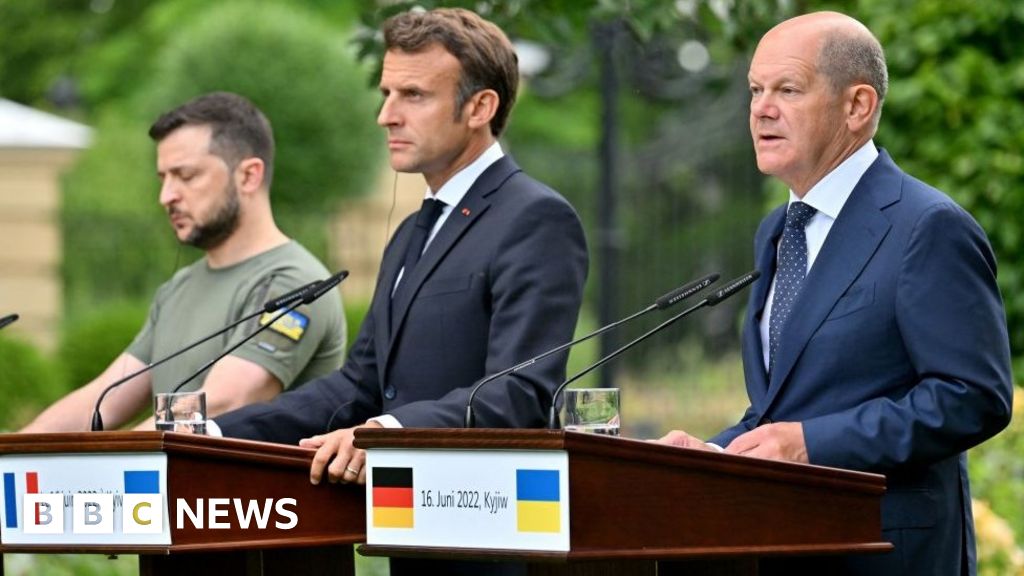
French President Emmanuel Macron, for instance, has occasionally spoken of the need to eventually find a way to “manage” Russia, a sentiment that has been met with skepticism in Kyiv and parts of Eastern Europe. German Chancellor Olaf Scholz, while steadfast in his military aid, has consistently emphasized avoiding direct NATO involvement, reflecting a broader European desire to contain the conflict without risking a direct confrontation with Russia.
Conclusion: A Future of Uncertainty
As Europe gears up for a potentially years-long engagement, the lack of a clear strategy to end the war looms large. The continent has demonstrated remarkable unity and resilience in confronting Russian aggression, committing substantial resources and political capital to Ukraine’s defense. However, simply preparing for a longer war, without simultaneously cultivating diplomatic pathways or defining achievable long-term objectives for peace, risks condemning Europe to an indefinite state of conflict-induced instability. The challenge for European leaders now is not just to sustain the fight, but to begin sketching out how this painful chapter might ultimately conclude, lest the continent find itself trapped in a perpetual cycle of attrition with no end in sight.