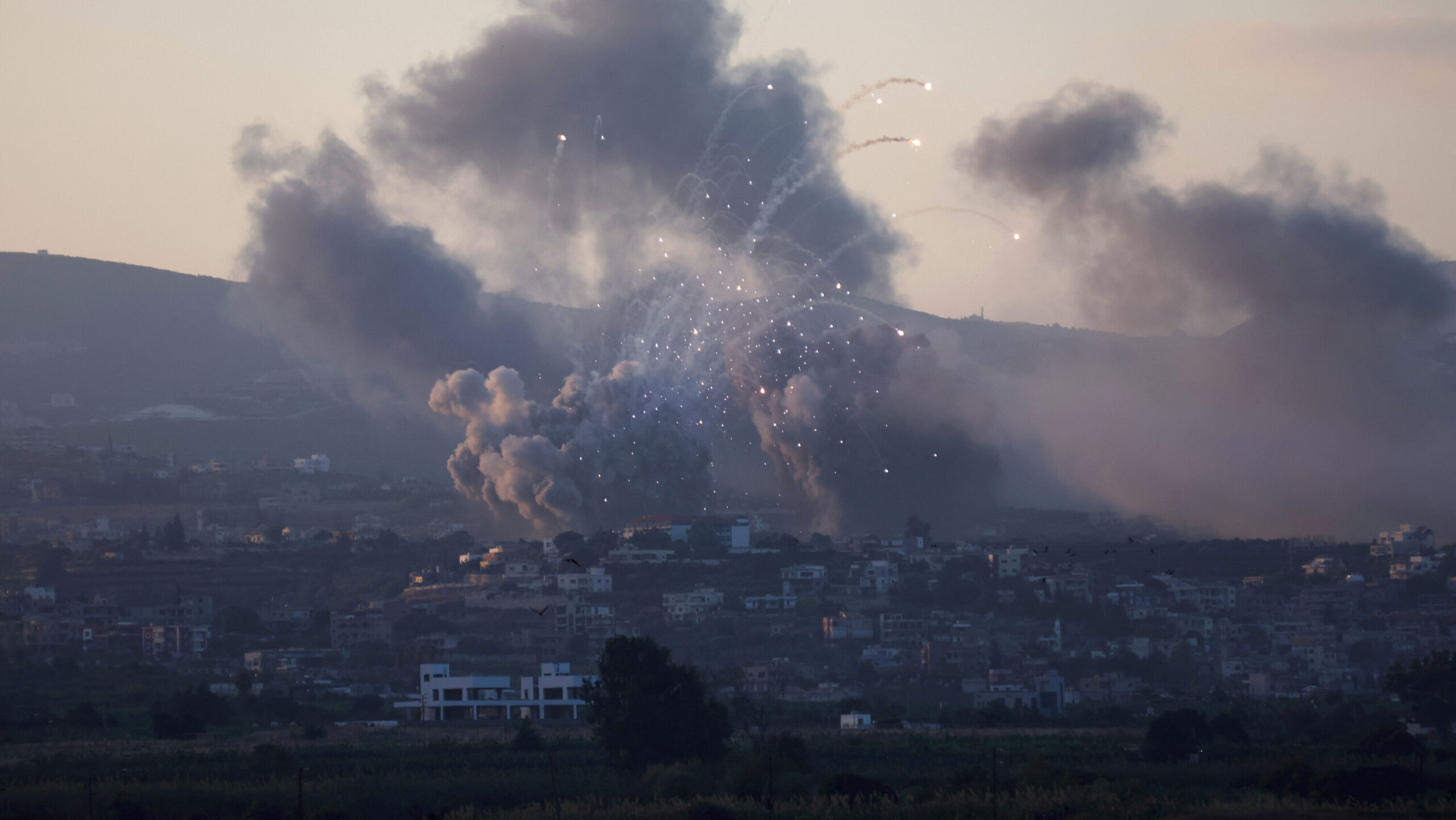
Israel Vows ‘Forceful’ Attack on Hezbollah After Deadly Strikes in Southern Lebanon
JERUSALEM / BEIRUT – February 21, 2024 – Israel has issued a stern warning, stating it will attack Hezbollah in Lebanon “forcefully,” following a series of Israeli strikes on southern Lebanon that tragically killed four people. The escalating rhetoric and actions underscore a rapidly deteriorating situation on the Israel-Lebanon border, threatening to ignite a wider regional conflict amidst the ongoing war in Gaza.
The latest casualties, reported by Lebanese state media and emergency services, included three members of a single family – a woman, her son, and her grandson – in the village of Souaneh, along with another individual in a separate strike. These deaths follow days of intense cross-border exchanges, with Hezbollah launching rockets and missiles into northern Israel, and Israel responding with airstrikes and artillery fire targeting what it describes as Hezbollah infrastructure and operatives.
Israeli Defence Minister Yoav Gallant articulated the government’s hardened stance, declaring that Israel would not hesitate to employ extreme force against Hezbollah should the Lebanese militant group continue its aggression. “We will not tolerate any threats from Lebanon, and we will act forcefully against any Hezbollah activity that threatens the security of our citizens,” Gallant stated in a public address, reiterating Israel’s commitment to push Hezbollah away from its northern border.
The Israeli military confirmed conducting several strikes in southern Lebanon, asserting they targeted Hezbollah military compounds and observation posts used to direct attacks against Israel. While Israel maintains its operations are defensive and proportionate, aimed at neutralizing threats, the rising civilian death toll in Lebanon is a grave concern for international observers and humanitarian organizations.
Hezbollah, a powerful Shi’ite political party and militant group backed by Iran, has been engaged in daily skirmishes with Israeli forces since the October 7 attack by Hamas on Israel. The group states its actions are in solidarity with Palestinians in Gaza and in retaliation for Israeli military actions. These exchanges have forced tens of thousands of residents on both sides of the border to evacuate their homes, creating a humanitarian crisis in border communities.
The latest escalation signifies a dangerous inflection point. For months, international mediators, including the United States and France, have been working behind the scenes to de-escalate tensions and prevent the conflict from spiraling into a full-blown war. However, the increasing frequency and lethality of the strikes suggest these diplomatic efforts are struggling to gain traction.
Analysts warn that a full-scale war between Israel and Hezbollah would be far more devastating than the current conflict in Gaza. Hezbollah possesses a vast arsenal of rockets, missiles, and drones, far more sophisticated and numerous than Hamas’s capabilities. Such a confrontation would likely lead to widespread destruction in both Israel and Lebanon, and have dire consequences for the entire Middle East region.
Lebanon’s caretaker government has repeatedly called for an end to Israeli incursions and condemned the targeting of civilians. However, the government’s limited control over Hezbollah, which operates largely independently in southern Lebanon, complicates any attempts at de-escalation from Beirut. The international community has largely refrained from directly blaming either side for the current border clashes, instead urging restraint from all parties.
The Israeli military has been vocal about its readiness for a multi-front conflict. Senior Israeli commanders have publicly stated that the Israel Defense Forces (IDF) have refined plans for a large-scale offensive in Lebanon if deemed necessary. This preparedness is seen by some as a deterrent, but by others as a dangerous prelude to an inevitable confrontation.
The memory of the 2006 Lebanon War, a 34-day conflict between Israel and Hezbollah, looms large over the current situation. That war resulted in the deaths of over 1,000 Lebanese, primarily civilians, and 165 Israelis, mostly soldiers, and caused extensive damage to Lebanese infrastructure. The scale of destruction and loss of life would undoubtedly be far greater today given the advancements in military capabilities on both sides.
As the violence persists, the humanitarian toll on both sides of the border continues to mount. Displaced families face an uncertain future, while the constant threat of rocket fire and airstrikes casts a pall over daily life. The international community remains on high alert, watching for any further signs that the proxy war could explode into a direct and catastrophic confrontation.
With Israel’s declared intent to act “forcefully” and Hezbollah’s unwavering resolve to continue its operations, the prospects for immediate de-escalation appear dim. The volatile border region remains a powder keg, with each strike and counter-strike bringing the Middle East closer to a conflict of unprecedented scale and severity.
Reporting by Reuters.