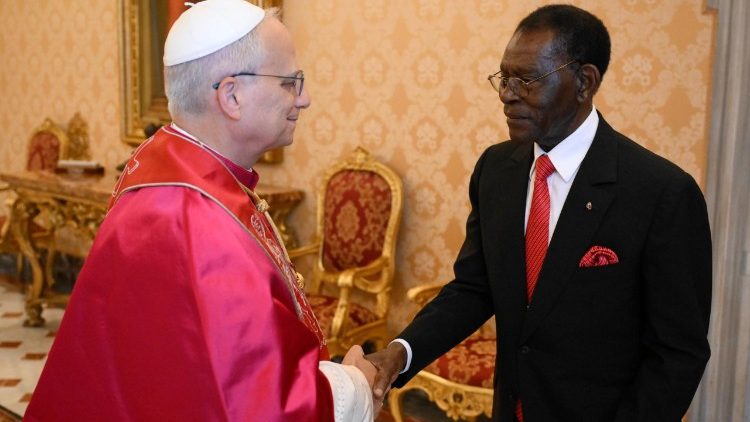
Pope Leo Denounces ‘Inhuman’ Prison Conditions in Equatorial Guinea, Calls for Reform
MALABO, EQUATORIAL GUINEA – In a powerful and unreserved statement delivered as he concluded his week-long pastoral visit to Africa, Pope Leo today leveled sharp criticism against the prison systems in Equatorial Guinea, describing conditions as ‘inhuman’ and calling for urgent reforms. The Pontiff’s remarks, made during a final press briefing, represent a significant intervention from the Holy See into the human rights record of the oil-rich West African nation, known for its authoritarian rule and long-standing concerns regarding judicial transparency and detainee welfare.
A Pontifical Plea for Justice and Dignity
Pope Leo’s criticism came as a stark contrast to the often diplomatic tone of papal visits. Speaking directly to reporters and, by extension, the international community, he expressed profound sorrow over reports of overcrowding, lack of medical care, and allegations of torture within Equatorial Guinea’s correctional facilities. “Our faith calls us to defend the dignity of every human person, even those incarcerated,” Pope Leo stated, his voice firm. “The reports we have received, and the testimonies that have reached us, paint a picture of suffering that cannot be ignored. Prisons must be places of rehabilitation, not despair; of justice, not vengeance. The conditions described are simply inhuman and violate fundamental human rights.”
Specific Concerns Highlighted
While the Pope did not delve into specific cases, sources close to the Vatican delegation indicated that discussions during the tour included detailed briefings on issues such as prolonged pre-trial detention, the absence of due process for many prisoners, and severe sanitary deficiencies. There were also concerns raised about the incarceration of political dissidents and journalists, which often draws international condemnation. The Pontiff’s remarks are seen as a direct challenge to the government of President Teodoro Obiang Nguema Mbasogo, who has ruled the country for over four decades.
The Broader Context of the Africa Tour
Pope Leo’s extensive Africa tour, which included stops in three other sub-Saharan nations before Equatorial Guinea, largely focused on themes of peace, reconciliation, interfaith dialogue, and the challenges of poverty and climate change. His messages were widely acclaimed for promoting unity and hope across diverse communities. The critical statement regarding Equatorial Guinea’s prisons, however, marks a pivot, underscoring the Church’s unwavering commitment to human rights and social justice even in the face of political sensitivities.
International Reaction and Domestic Implications
The Pope’s comments are expected to resonate widely, potentially intensifying international scrutiny on Equatorial Guinea’s human rights record. Rights organizations have long documented abuses within the country’s prisons, but a direct condemnation from the head of the Catholic Church carries unique moral and diplomatic weight. It remains to be seen how the government in Malabo will respond. Past reactions to international criticism have ranged from outright denial to promises of investigations that rarely materialize into substantive change.
Context and Background: Equatorial Guinea’s Human Rights Record
Equatorial Guinea, a small nation rich in oil and gas, has long faced criticism for its governance and human rights practices. President Teodoro Obiang Nguema Mbasogo, Africa’s longest-serving non-royal head of state, came to power in a coup in 1979. His administration has been consistently accused by international bodies and NGOs of suppressing political dissent, severely restricting freedoms of speech and assembly, and engaging in arbitrary arrests and detention. Reports from organizations like Amnesty International and Human Rights Watch have frequently highlighted overcrowded prisons, lack of access to legal counsel, and allegations of torture and ill-treatment of detainees.
Despite its significant oil wealth, a large portion of the population lives in poverty, and the country’s judiciary is widely considered to lack independence. The Catholic Church, with a substantial presence in the country, often finds itself navigating a delicate balance between its pastoral duties and its prophetic role in advocating for justice. The Pope’s direct criticism can be interpreted as a necessary fulfillment of this prophetic role, demonstrating the Church’s willingness to speak truth to power, even in complex geopolitical environments.
Conclusion: A Call to Action and Future Outlook
Pope Leo’s concluding remarks on his Africa tour have cast a harsh spotlight on an issue that has often remained obscured despite persistent concerns from human rights advocates. His condemnation of prison conditions in Equatorial Guinea is not merely a statement but a powerful call to action, both for the government of Equatorial Guinea to initiate meaningful reforms and for the international community to exert sustained pressure. The Pontiff’s words serve as a stark reminder that true human development cannot be achieved without upholding the fundamental dignity and rights of every individual, particularly those most vulnerable within society. Whether this papal intervention will lead to concrete improvements in the lives of prisoners in Equatorial Guinea will be a critical measure of its long-term impact, but it undoubtedly marks a significant moment in the ongoing struggle for justice in the nation.