IDF Nears Capture of Hezbollah’s Historic Bint Jbeil Stronghold, Signaling Major Shift on Northern Front
JERUSALEM – In a significant development on the Israel-Lebanon border, the Israel Defense Forces (IDF) have announced that they are close to capturing Bint Jbeil, a town of immense strategic and symbolic importance that has long served as a key stronghold for Hezbollah. This potential breakthrough marks a critical escalation in the ongoing conflict, threatening to redefine the dynamics of the northern front and significantly impacting Hezbollah’s operational capabilities and morale.
Bint Jbeil: A Symbol of Resistance and Conflict
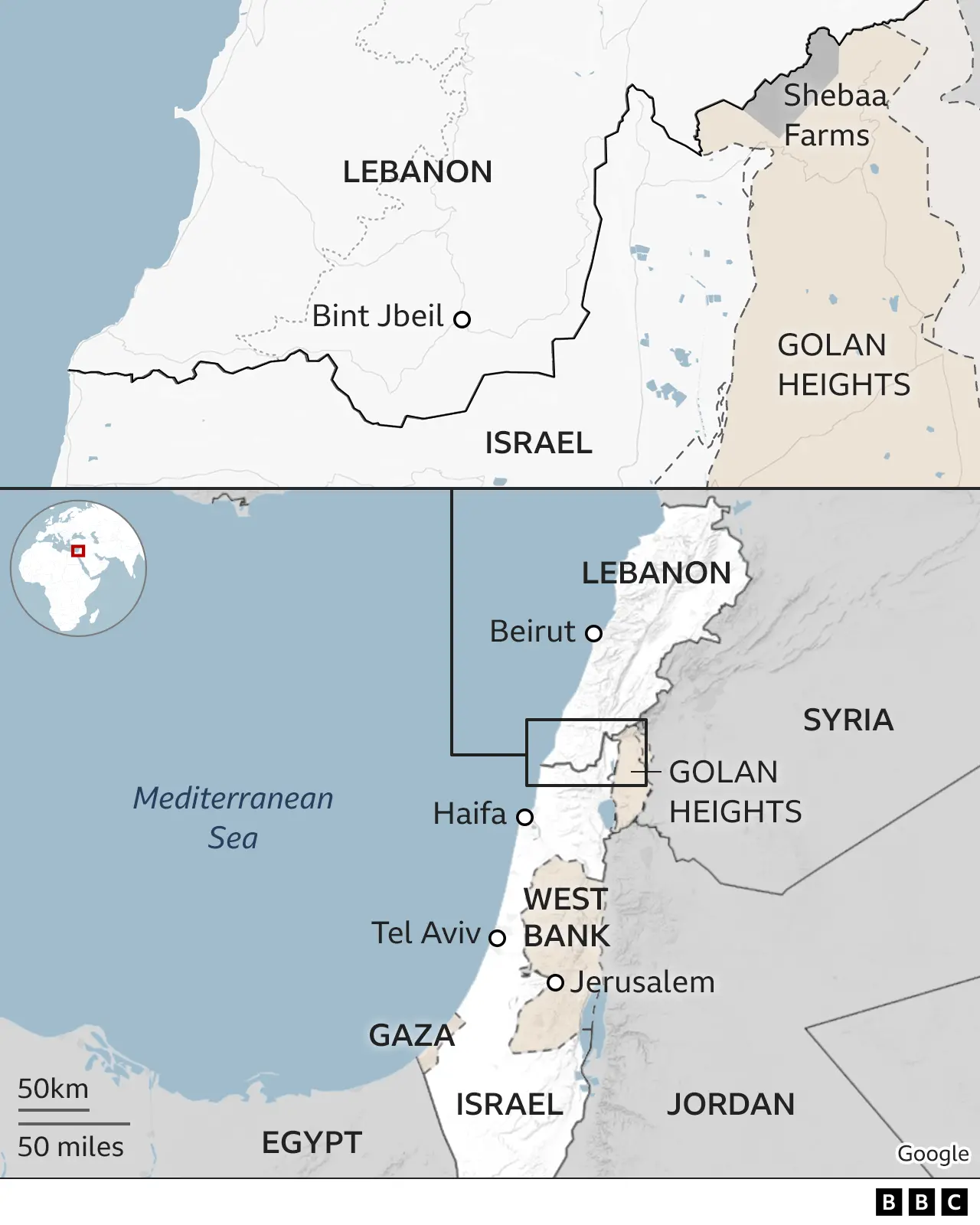
Bint Jbeil is not just another town on the Lebanese border; its name resonates deeply within the history of the Israeli-Lebanese conflict. Located in southern Lebanon, approximately four kilometers from the Israeli border, it has been a focal point for clashes for decades. For Hezbollah, Bint Jbeil is more than a military outpost; it is a symbol of their resilience and a testament to their claim of successfully resisting Israeli incursions. The town gained particular notoriety during the 2006 Second Lebanon War, when fierce battles between Israeli forces and Hezbollah militants became emblematic of the group’s tenacious defense and sophisticated tunnel networks. Its capture would represent a profound psychological and tactical blow to the Iran-backed Shiite group.
The Current Offensive: A Broader Strategy
The IDF’s current operations in and around Bint Jbeil are part of a broader, intensified campaign along the northern border that began in the wake of the October 7 attacks by Hamas. While much international attention has focused on Gaza, the northern front has simmered, with daily exchanges of fire, drone attacks, and rocket launches between the IDF and Hezbollah. The Israeli military has made clear its objective to push Hezbollah’s forces away from the border, dismantle their military infrastructure, and ensure the safe return of tens of thousands of displaced Israeli residents from northern communities.
Reports from the ground suggest that the IDF has been employing a combination of aerial bombardments, artillery fire, and ground incursions to systematically clear Hezbollah positions. These tactics aim to degrade Hezbollah’s capabilities, including command centers, rocket launchers, and observation posts that are often embedded within civilian areas. The close-quarters fighting in Bint Jbeil highlights the urban warfare challenges faced by Israeli troops, navigating complex terrain and confronting a deeply entrenched adversary.
Hezbollah’s Defense and the Cost of Conflict
Hezbollah, known for its asymmetric warfare tactics, has mounted a fierce resistance, utilizing its extensive network of tunnels and bunkers, anti-tank missiles, and small arms fire. Their strategy often involves drawing Israeli forces into urban combat, where their intimate knowledge of the terrain can be leveraged. The group has publicly vowed to continue its fight against Israel, framing its actions as a defense of Lebanese sovereignty and a response to Israeli aggression.
However, the cost of this prolonged conflict has been immense for both sides, and particularly for the civilian population of southern Lebanon. Hundreds of thousands have been displaced from their homes, and significant infrastructure damage has been reported. International organizations and humanitarian groups have repeatedly called for de-escalation, expressing deep concerns about the potential for a wider regional conflagration. The prospect of Bint Jbeil falling into Israeli hands only intensifies these fears, as it could be perceived by Hezbollah as a red line, potentially triggering a more severe response.
Regional Implications and Future Outlook
The potential capture of Bint Jbeil carries significant regional implications. For Israel, it would be a tangible military achievement, demonstrating its resolve and capacity to confront Hezbollah directly on Lebanese soil. It would also serve as a message to Iran, Hezbollah’s primary patron, about the limits of its proxy forces’ capabilities. Conversely, for Hezbollah, losing Bint Jbeil would be a major propaganda defeat and a strategic setback, forcing them to re-evaluate their defensive posture and potentially their engagement strategy.
Analysts are divided on whether this development will lead to de-escalation or further escalation. Some argue that a decisive Israeli victory in a symbolic stronghold might pave the way for a more stable border, while others fear it could push Hezbollah, already under significant pressure, to unleash its full arsenal, including more precision-guided missiles aimed deeper into Israel. The international community, led by the United States and France, has been actively engaged in diplomatic efforts to prevent a full-blown war, but progress remains elusive as long as the underlying tensions persist.
As the IDF presses its advance, the eyes of the region remain fixed on Bint Jbeil. Its fate will not only shape the immediate future of the northern front but could also have lasting consequences for the geopolitical landscape of the Middle East, determining the trajectory of one of its most enduring and volatile conflicts.