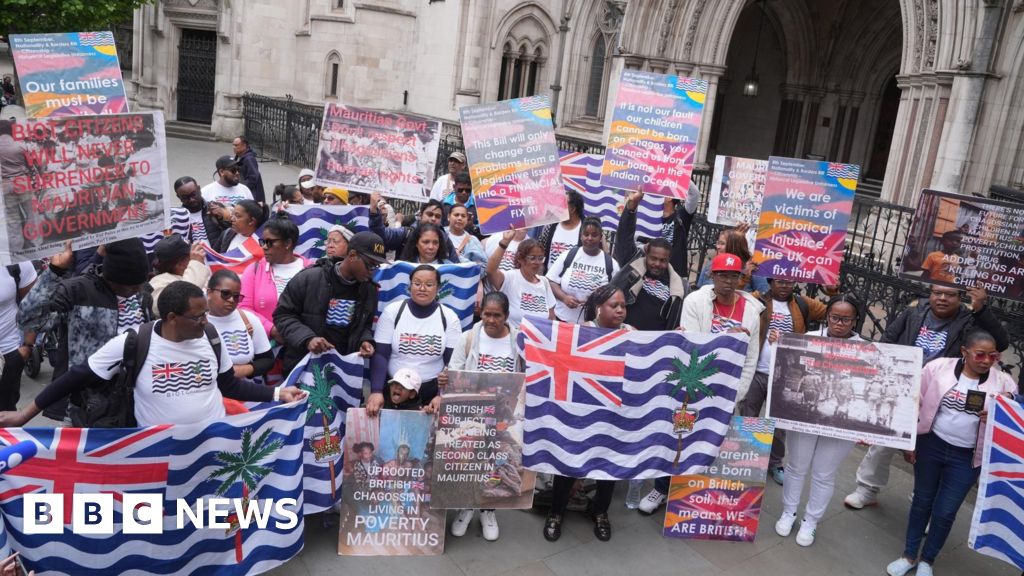
UK Freezes Chagos Islands Return Deal, Citing ‘Election Uncertainty’ Amid Geopolitical Shifts
London, UK – The United Kingdom has unilaterally frozen ongoing negotiations with Mauritius regarding the return of the Chagos Islands, a move that has drawn strong criticism and reignited the decades-long dispute over the strategically vital archipelago. Citing domestic political uncertainty ahead of a general election, the UK Foreign Office has paused talks, effectively putting on hold a potential resolution to one of the last vestiges of colonial rule and dashing hopes for the exiled Chagossian people.
A Decades-Long Legacy of Displacement and Dispute
The Chagos Islands, officially known as the British Indian Ocean Territory (BIOT), have been under UK sovereignty since 1814. However, the controversy escalated in the 1960s and 70s when the entire indigenous population, the Chagossians, was forcibly removed by the UK government to make way for a vital US military base on Diego Garcia, the largest island in the archipelago. The islands were detached from Mauritius by the UK in 1965, just three years before Mauritius gained independence, a move deemed illegal by international bodies.
For decades, the displaced Chagossians have campaigned for their right to return, facing numerous legal battles and appeals. Their plight gained significant international traction, culminating in a landmark advisory opinion from the International Court of Justice (ICJ) in 2019, which found the UK’s administration of the islands to be unlawful and called for their decolonization. This was followed by a resolution from the UN General Assembly overwhelmingly endorsing the ICJ’s findings, placing considerable diplomatic pressure on London.
Hopes Raised, Then Dashed
Following years of defiance, the UK government under then-Prime Minister Liz Truss in 2022 signaled a shift, announcing its intention to negotiate a deal with Mauritius. This marked a significant departure from previous policy, offering a glimmer of hope that a resolution was finally within reach. Talks began, focusing on the sovereignty of the islands while ensuring the continued operation of the US defense facility on Diego Garcia, which is considered crucial for Western security interests in the Indo-Pacific region.
Mauritius, which claims the islands as an integral part of its territory, had been actively engaged in these discussions. The potential deal was expected to involve the formal transfer of sovereignty to Mauritius, with a long-term lease agreement for the Diego Garcia base remaining in place. Such an outcome would have been hailed as a significant diplomatic achievement, allowing the UK to align with international law and address a historical injustice, while safeguarding strategic defense assets.
Geopolitical Tensions and Domestic Politics at Play
The sudden freeze, communicated by a junior foreign minister to Mauritius, cites the upcoming general election in the UK as the primary reason. However, observers suggest that deeper geopolitical considerations are likely at play. The strategic importance of Diego Garcia has only intensified in recent years, particularly with rising tensions in the Indo-Pacific, growing Chinese influence, and the ongoing conflict in Ukraine. The base serves as a crucial staging point for US and allied military operations, intelligence gathering, and logistical support across the Indian Ocean.
Some analysts speculate that a change in leadership within the Conservative Party, or indeed a potential Labour government, might seek to revisit or renegotiate the terms, possibly driven by concerns over national security or a desire to avoid perceived concessions. The explicit mention of “election uncertainty” offers a convenient, albeit thinly veiled, reason to pause a complex and potentially contentious agreement.
Mauritius and Chagossians Express Disappointment
The Mauritian government has expressed profound disappointment at the UK’s decision. Foreign Minister Alan Ganoo stated that Mauritius remains committed to a peaceful resolution but emphasized that the freeze delays justice for the Chagossian people and undermines the spirit of cooperation. He added that Mauritius would continue to press its case through all available international avenues.
For the Chagossians, the news is a devastating blow. Many had believed that after decades of struggle, they were finally on the cusp of seeing their ancestral lands returned, even if their own repatriation remained a complex issue. “This is a betrayal,” commented a representative of a Chagossian advocacy group. “The UK continues to play political games with our lives and our right to return home.”
Uncertain Future and International Standing
The freezing of the deal raises significant questions about the UK’s commitment to international law and its global standing. Critics argue that it risks further damaging the UK’s reputation on the world stage, especially concerning its post-colonial legacy. While the stated reason is domestic politics, the timing inevitably invites scrutiny regarding the UK’s long-term strategy for the BIOT and its willingness to comply with UN and ICJ rulings.
The path forward remains unclear. While the UK maintains that negotiations will resume after the election, there is no guarantee that a future government will adopt the same approach. Mauritius is likely to intensify its diplomatic pressure, potentially seeking further international action. For the Chagossian community, the indefinite delay prolongs their heartbreaking exile, a stark reminder of the enduring human cost of colonial power dynamics and strategic geopolitics.