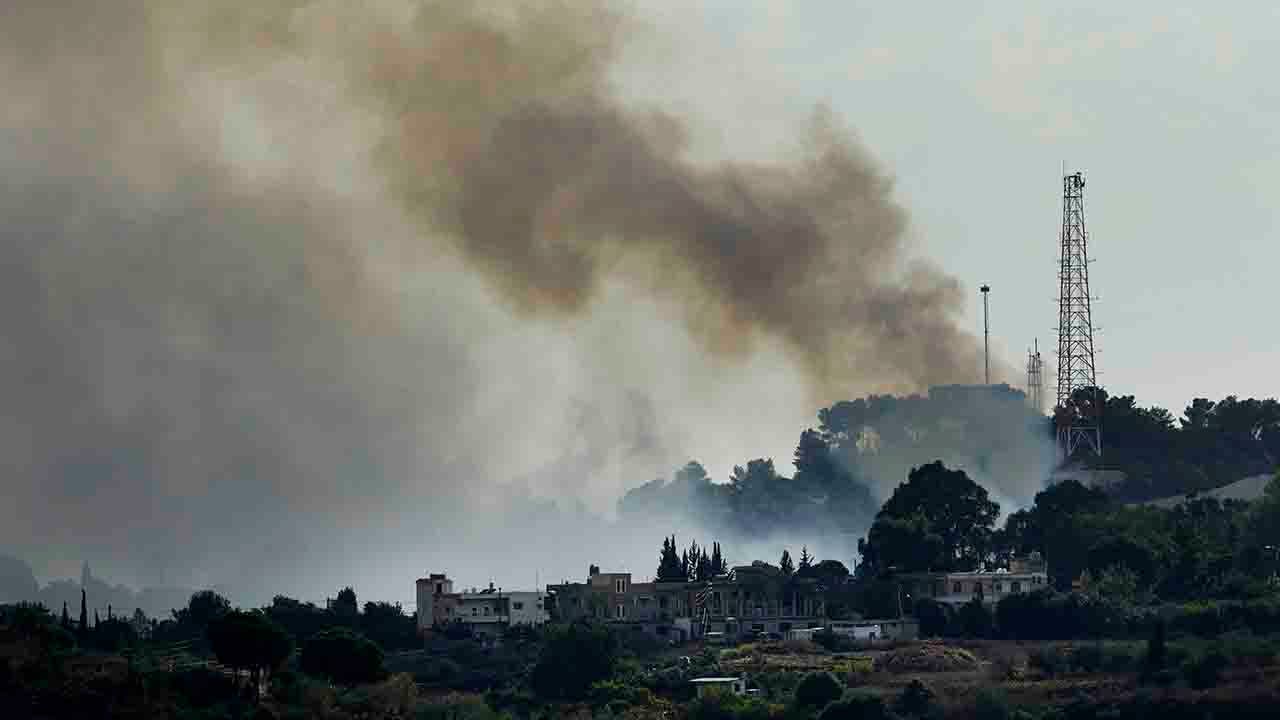
Israel Escalates Northern Front: 14 Dead in Lebanon Strikes Amid Border Evacuation Order
BEIRUT/JERUSALEM – In a significant escalation along the volatile Israel-Lebanon border, Israeli airstrikes overnight and into the morning have killed at least 14 people in southern Lebanon. The deadly attacks prompted Israel to issue urgent warnings for its residents to evacuate towns extending beyond a newly defined ‘buffer zone’ near the frontier. This rapid intensification of hostilities comes amidst heightened regional tensions, raising fears of a broader conflict involving heavily armed factions.
Escalation Along the Blue Line
Deadly Strikes in Southern Lebanon
The latest Israeli operations targeted several locations across southern Lebanon, with Lebanese security sources reporting a total of 14 fatalities. The strikes, which reportedly utilized air-to-surface missiles and precision drones, hit targets primarily in the Tyre and Nabatieh districts. Among the areas most affected were the vicinity of Kfar Kila, Taybeh, and Odaisseh, all situated close to the contested ‘Blue Line’ marking the de facto border.
Lebanese state media and local officials condemned the attacks, asserting that many of the casualties were civilians, including women and children, caught in the crossfire. However, Israeli military sources, speaking on condition of anonymity, indicated that the strikes were directed at identified Hezbollah operational infrastructure, including rocket launch sites, command centers, and weapons depots, in response to recent cross-border infiltrations and rocket fire.
Emergency services in Lebanon faced significant challenges reaching some of the hardest-hit areas due to ongoing security concerns and damage to infrastructure. Hospitals in Tyre and Sidon reported receiving numerous casualties, with several individuals in critical condition.
Israeli Evacuation Orders Expand
Concurrently with the strikes, the Israeli Ministry of Defense announced a dramatic expansion of its evacuation orders for communities along its northern border. Residents of towns up to 4 kilometers (approximately 2.5 miles) from the Lebanese border were previously advised to leave. The new directive now extends this advisory to towns situated up to 8 kilometers (about 5 miles) from the frontier, effectively creating a significantly larger ‘buffer zone’ on the Israeli side.
Cities and towns such as Metula, Kiryat Shmona, Shlomi, and even parts of Safed are now either under mandatory evacuation orders or strong advisories. The move, according to an Israeli military spokesperson, is a precautionary measure aimed at ensuring the safety of Israeli citizens in light of escalating threats and the potential for further direct engagement with Hezbollah and other militant groups operating from Lebanon.
Local authorities in northern Israel are working with the national emergency management agency to provide temporary accommodation and support services for thousands of displaced residents. The expanded evacuation zone underscores Israel’s growing concern over potential ground incursions or intensified rocket barrages from Lebanon.
Official Reactions and International Concerns
Statements from Jerusalem and Beirut
In Jerusalem, an Israel Defense Forces (IDF) spokesperson reiterated that Israel holds the Lebanese government responsible for any attacks originating from its territory. They emphasized that the military would continue to act decisively to protect Israeli sovereignty and its citizens, warning that Hezbollah’s actions were dragging Lebanon towards a dangerous confrontation.
Lebanon’s caretaker Prime Minister and Foreign Ministry issued strong condemnations, accusing Israel of flagrant violations of international law and Lebanese sovereignty. They called upon the international community and the United Nations Security Council to intervene and halt what they described as Israeli aggression. Hezbollah, through its media channels, vowed swift and commensurate retaliation, stating that the blood of its martyrs and innocent civilians would not be in vain.
Calls for De-escalation
The United Nations Interim Force in Lebanon (UNIFIL) expressed grave concern over the sharp escalation, urging all parties to exercise maximum restraint and de-escalate the situation immediately. UNIFIL spokesperson Andrea Tenenti emphasized the critical need to restore stability and prevent miscalculation that could lead to a wider, devastating conflict.
International powers, including the United States and the European Union, also weighed in, calling for a cessation of hostilities and stressing the importance of protecting civilian lives. Diplomatic efforts are reportedly underway behind the scenes to mediate a de-escalation, but prospects remain uncertain given the current trajectory of events.
Context and Background
The recent surge in violence is rooted in decades of animosity and intermittent conflict between Israel and Hezbollah, the powerful Iran-backed Shiite militant group and political party in Lebanon. The ‘Blue Line,’ demarcated by the UN after Israel’s withdrawal from southern Lebanon in 2000, has been a frequent flashpoint. The concept of a ‘buffer zone’ harks back to previous Israeli security strategies in the region, aimed at physically separating its population centers from hostile forces.
This latest escalation occurs against the backdrop of broader regional instability, including the ongoing conflict in Gaza, which has emboldened various proxy groups and heightened sectarian tensions across the Middle East. Both sides have significantly fortified their positions and capabilities since the last major conflict in 2006, making any new large-scale confrontation potentially far more destructive.
Future Outlook
The situation along the Israel-Lebanon border remains extremely volatile, with a high risk of further escalation. The expanding Israeli ‘buffer zone’ and the deadly strikes in Lebanon signal a hardening of positions and a potential move towards more direct and sustained military engagement. The immediate future hinges on the extent of Hezbollah’s retaliation and Israel’s subsequent response.
The international community faces a daunting task in attempting to de-escalate a conflict that appears to be rapidly spiraling. The humanitarian consequences of continued fighting for civilian populations on both sides would be severe, placing immense pressure on aid organizations and regional stability. Without a rapid diplomatic breakthrough, the region risks being plunged into a wider and potentially devastating war.